



Finance & Development, June 2020, Vol. 57, Number 2PDF version
PEOPLE IN ECONOMICS
Poverty Fighters
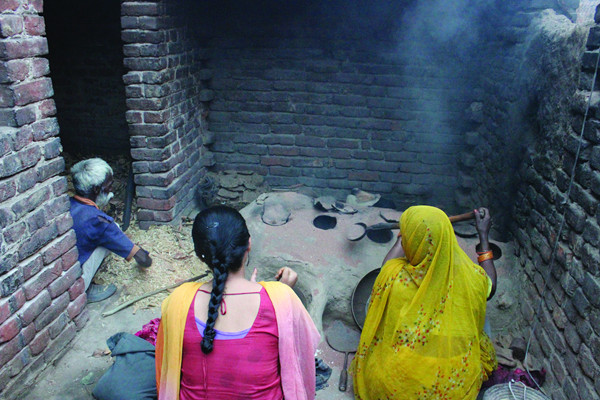
Some seemingly great development ideas don’t work out as expected. One that famously flopped was to replace open-fire cooking used by 3 billion of the world’s poorest people with more efficient, less polluting stoves under the Global Alliance for Clean Cookstoves initiative. The $400 million project was backed by the United Nations and launched by former US Secretary of State Hillary Clinton in 2010. It set out to reduce indoor air pollution, which kills 2 million people a year, while empowering women and helping the environment. After initial success, millions of stoves built in India were largely abandoned after four years.
Why didn’t it succeed? Researchers from the Abdul Latif Jameel Poverty Action Lab, known as J-PAL, went to the field to find out. Following about 2,500 households in 44 villages in the eastern Indian state of Odisha, they discovered many seemingly minor reasons. The new stoves needed more attention, would break down and weren’t repaired, took longer to cook food, and couldn’t be moved outdoors because of the chimneys that sent the smoke outside, the research showed.
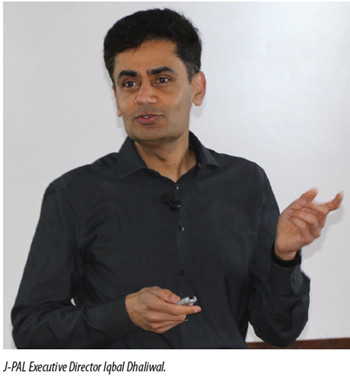
“For the hyper-rational being that lives in economic models, none of this ought to matter,” wrote Abhijit Banerjee, a Massachusetts Institute of Technology (MIT) economics professor who is a cofounder and director of J-PAL, in an article. However, the experience was a reminder that “the fact that we think something should work is not enough—it needs to work for the people who use them.” During its 17-year history, J-PAL has developed a scientific, evidence-driven-economics approach to fighting poverty. According to Executive Director Iqbal Dhaliwal, this provides an alternative to “basing decisions on instinct, ideology, or inertia.”
On the second floor of a nondescript MIT building in Cambridge, across the Charles River from Boston, J-PAL’s headquarters could easily be mistaken for any ordinary office in a large university. But J-PAL’s reach is broad. On its own or through a network of affiliated researchers around the world, the donor-funded organization has carried out more than 1,000 randomized controlled trials in more than 80 countries, applying to economics the research methodology that’s long been the gold standard for testing new drugs and medical treatments. Programs verified in this way have been scaled up to reach more than 400 million people around the world, J-PAL says.
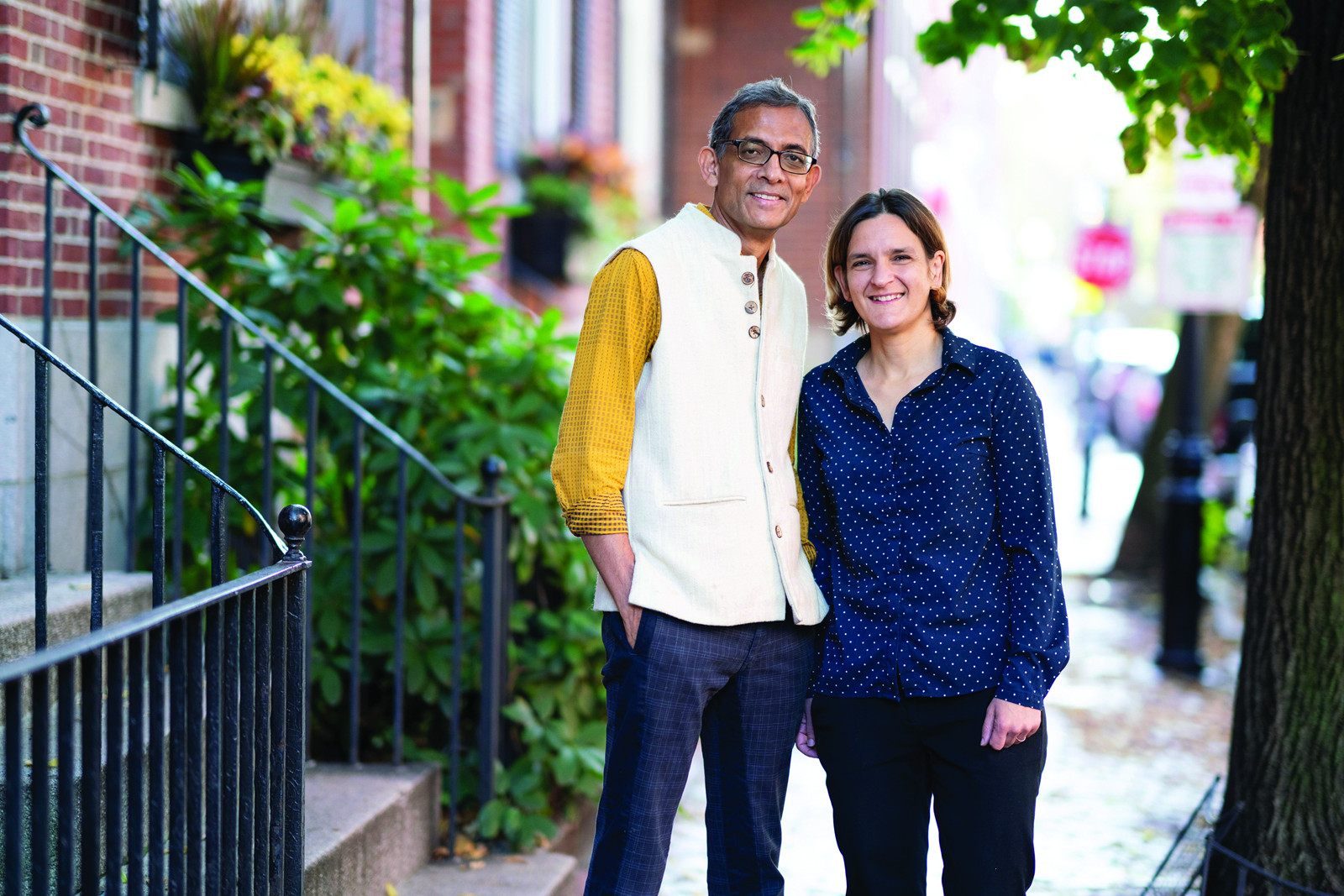
This record was behind the 2019 Nobel Prize in economics awarded to Banerjee, his wife and J-PAL cofounder Esther Duflo, and their friend and frequent collaborator, Harvard economist Michael Kremer.
“Their experimental research methods now entirely dominate development economics,” the Nobel Prize committee said. This has “transformed development economics” with its ability to provide “reliable answers about the best ways to fight global poverty.”
In a world that increasingly despises expertise and academic research, where the very perception of reality is often shaped by political beliefs, J-PAL can claim objectivity, providing policy advice based on evidence tested in the field using a scientific approach. It can show palpable results in helping vulnerable people solve very practical problems.
Banerjee and Duflo are at its center. They founded the organization in 2003 as the Poverty Action Lab, along with Sendhil Mullainathan, a former Harvard professor who is still a contributor. They set out to change the world’s approach to poverty, no less.
In 2005, the Lab was renamed to honor the father of Mohammed Jameel, an MIT alum and Saudi businessman and philanthropist whose family foundation is an ongoing supporter. Other backers include large private donors and advanced economy development agencies.
J-PAL’s staff includes about 400 research, policy, education, and training professionals, with headquarters in Cambridge and regional centers in North America, Latin America and the Caribbean, Europe, Africa, the Middle East, South Asia, and Southeast Asia. An additional 200 researchers oversee projects that are executed by about 1,000 contractors. The organization has awarded $63 million in grants to fund new research since its founding in 2003.
Although its focus was initially on poor and emerging market economies, J-PAL is now active in Europe, researching, for example, initiatives to promote social inclusion of immigrants. Its North America branch has projects on retraining and skills development for workers, homelessness and housing, criminal justice reform, and health.
Divide to conquer
Duflo, a 47-year-old French economist who earned her doctorate at MIT and made the institution break a rule against hiring its own students, describes the randomized trials at the core of J-PAL’s approach as taking “a big problem and breaking it into manageable pieces, smaller questions that admit rigorous answers.”
The method consists of testing a potential solution to a development problem—such as how to increase the use of bed nets to fight malaria—by comparing a group that receives a treatment with a control group that receives nothing. The groups should be as similar as possible and randomly created so that no other factors have an influence and researchers can understand the treatment’s impact. There can be multiple groups to compare different solutions. Developed in the 19th century, such trials were applied in agriculture, medicine, and political science much earlier than in economics, where the first such studies date from the 1960s.
Macroeconomic research often deals with lofty topics expressed in complex equations and tested with intricate econometric techniques. Even Nobel laureates struggle with some of it. In their 2019 book Good Economics for Hard Times, Duflo and Banerjee acknowledge that part of productivity growth “cannot be explained by changes in things economists can measure. To make ourselves feel better, economists have given it its own name: Total Factor Productivity.” Their MIT colleague and fellow Nobel laureate Robert Solow defined the concept as “a measure of our ignorance.”
By contrast, development research can sound prosaic. Should anti-malaria bed nets in Kenya be given away, subsidized, or sold at market price? Is a buyback program a viable way to mop up the large amount of unused opioid pills in the United States? How do you make sure poor Indonesian households receive all the rice they are entitled to under a federal program?
Information for the poor
Those are all questions J-PAL has taken on. Researchers often uncover surprisingly simple solutions.
One of Indonesia’s largest social assistance programs is Rice for the Poor, known locally as Raskin. The $1.5 billion-a-year system aimed to distribute 15 kg of rice a month to the poorest households at a fifth of the market price. However, bureaucracy and corruption were getting in the way. Community leaders responsible for distributing the rice would often tinker with pricing, allowances, or qualifying criteria. Eligible households ended up receiving a third of what they were entitled to at a cost 40 percent higher than it should have been.
Rather than toughening up controls, Indonesia in 2012 assigned researchers to work with J-PAL in testing ways to raise awareness about qualification criteria, monthly allotments, and prices using information-bearing “social protection cards.” Randomized tests showed they were so effective that within a year the government issued about 15 million of them and bundled two other cash-transfer programs into the project, adding up to more than $4 billion.
Expecting that there will be differences between theory and practice is one advantage of J-PAL’s approach. So is not presuming that well-trained lab scientists are wiser or more rational than the people they hope to help.
“The poor are no less rational than anyone else—quite the contrary,” Banerjee and Duflo wrote in their 2011 book, Poor Economics. “Precisely because they have so little, we often find them putting much careful thought into their choices: They have to be sophisticated economists just to survive.”
Born in Mumbai in 1961 to two accomplished economics professors, the Harvard PhD Banerjee has little patience with those “hyper-rational” beings living inside models. He derides the “presumption of knowledge” that he says accompanies much of macroeconomic research, often stemming from little more than “a whole bunch of correlations, many of which are very hard to interpret, and some actual concrete facts, which are probably reasonably reliable.” He spoke to F&D in his small office in the MIT economics department. Behind a door covered with economics and political cartoons, the cramped space full of books contrasts with expansive views of the Charles River and the Boston skyline.
Duflo’s somewhat roomier office is two doors down from Banerjee’s. They met when he was her PhD supervisor at MIT in 1999, married in 2015, and have two children together.
She has learned never to be disappointed by any set of research results. “One thing that we’ve learned very early from randomized control trials is that you generally get surprised by what you find,” she says.
Does it add up?
Breaking a big problem down does not necessarily mean the smaller pieces are simpler. In a 2016 lecture at the IMF, Duflo presented several studies showing how micro interventions can have significant macro effects. One involved better enforcement of environmental regulations in heavily polluting textile plants in the Indian state of Gujarat, home to some of the earth’s most polluted cities. The randomized trial changed the rules for assigning auditors to companies and found that enforcement improved when inspectors were not paid by those they were auditing. Although that’s not exactly a groundbreaking finding, having the data to prove it strengthens the case.
Duflo argued that broad principles that often guide international institutions—such as democracy and good governance—may be of little value because they’re too general. Economists could achieve more concrete results by fixing the plumbing, the part of any system that’s taken for granted and people notice only when it stops working. She titled the lecture “The Economist as Plumber.”
One problem with randomized controlled trials is that the small answers might not add up to address the big problem. Another is that conclusions may be too specific to where the research was conducted. The findings of a malaria study in Kenya might be completely irrelevant for Brazil, for example. Economists refer to this as the “transportation” problem.
“Demonstrating that a treatment works in one situation is exceedingly weak evidence that it will work in the same way elsewhere,” wrote Angus Deaton, the eminent Scottish development economist and 2015 economics Nobel laureate, in an article last year.
Deaton wrote several papers laying out his reservations about randomized trials. The only way to apply the findings from one study in a new context, he wrote in the same article, is by using “previous knowledge and understanding,” interpreting the trial results “within some structure, the structure that, somewhat paradoxically, the RCT [randomized controlled trial] gets its credibility from refusing to use.”
Macro versus micro
Dhaliwal, the J-PAL executive director, was hired 11 years ago to address that specific problem. He is a fast-talking Indian economist with degrees from the University of Delhi and Princeton and is married to Gita Gopinath, the IMF chief economist.
“When Esther hired me in 2009, they had realized that the journey from a research result into a policy action requires much more considered effort,” Dhaliwal says. To bridge the gap, evidence must be made accessible to policymakers andsvalidated by other studies in different contexts. In addition, implementation needs to be monitored to bring new reality checks back to the policy findings, Dhaliwal says.
When asked how best to bridge the gaps between research and policy and between micro- and macroeconomics, Duflo points to a copy of Good Economics for Hard Times.
“This book and Poor Economics present what we’ve learned about one topic as a narrative that makes sense of it all together,” she says. Good Economics for Hard Times compiles vast amounts of research to dismiss common assumptions on topics like migration, labor, and trade. It shows economists often get a lot of things right but still fail to establish trust with the wider public. Banerjee blames his profession’s shortcomings.
“People put faith in populist narratives because they don’t put faith in economists’ narrative anymore,” he says.
As she contemplates the future, Duflo says she hopes the recognition of the Nobel Prize will put J-PAL “in a different level” and help expand its work into areas like climate change and helping governments improve the quality and make better use of the vast amounts of data they collect.
J-PAL’s method of breaking a big problem down into smaller questions can be applied even to a quintessentially global problem like climate change. Field studies conducted in Mexico, Wisconsin, and Michigan showed that residential energy-efficiency-improving technologies often don’t deliver the savings promised. Measures like updating appliances and retrofitting and weatherproofing houses have low uptake. And when they are adopted, the resulting efficiency gains are usually offset by higher consumption.
Similarly, an investigation in India showed that when small farms were provided consulting help and loans to acquire new, more efficient equipment, they produced more and made more money–but didn’t save energy. Duflo attributes this to “optimizing behavior” that often is not properly calculated in estimates of potential benefits.
Bigger problems
As of mid-March, J-PAL, like the rest of the world, was locking down to stop the spread of the COVID-19 pandemic. The organization quickly made operational adjustments like pulling staff from the field and increasing phone surveys. It offered financing to quickly launch new research initiatives such as cash transfers, digital identification, and innovation in government practices.
The pandemic presented a new set of big problems and showed how critical it can be to have accurate, timely statistics. It underscored the importance of using government administrative data to improve decision-making and share results “faster and cheaper than [with] field work,” Dhaliwal says.
Dhaliwal says the post–COVID-19 world will reassess the role and value of governments in a crisis, leading to better public management and more appreciation of the importance of social protection.
“For the last few years, a lot of new philanthropy has premised itself on the belief that governments are unnecessary and can be bypassed,” he says. “This crisis makes it clearer that we all need to invest in building governments’ capacity to make good decisions and to be resilient to handle big events like this one,” he adds, mentioning as an example the ability to make quick emergency cash transfers, which has been a challenge even for a country like the United States.
Dhaliwal sees the coronavirus plague as foreshadowing what a climate crisis could look like.
“This pandemic has shown us, first, the supremacy of nature and, second, how once a tipping point is hit (community spread of infections or increase in earth’s temperature), it is very hard to avoid significant damage and death,” he says. “So the time to act is now. It has also shown that if we do the right thing (like social distancing), and do it drastically, it can have a positive impact.”
PHOTOS: BRYCE VICKMARK; COURTESY OF J-PAL; THOMAS CHUPEIN
Opinions expressed in articles and other materials are those of the authors; they do not necessarily represent the views of the IMF and its Executive Board, or IMF policy.