




Economics can’t avoid distributional
issues—it must make room for
insights from other disciplines
We live in an age of material abundance and social disquietude. A quarter millennium of industrial revolution has produced an awesome increase in prosperity: almost 8 billion people and enough wealth for every one of them to live lives of unprecedented comfort.
The problem, of course, is in the distribution.
The rise of economic inequality in the developed world is weighing on growth and straining the fabric of liberal democracy. And economists, who exert a profound influence on public policymaking, have an important role to play in analyzing the inequities of distribution, exploring the consequences, and shaping remedies. The past half century has provided a mountain of data. And in the past decade, particularly among younger economists, there has been a clear surge of interest and engagement.
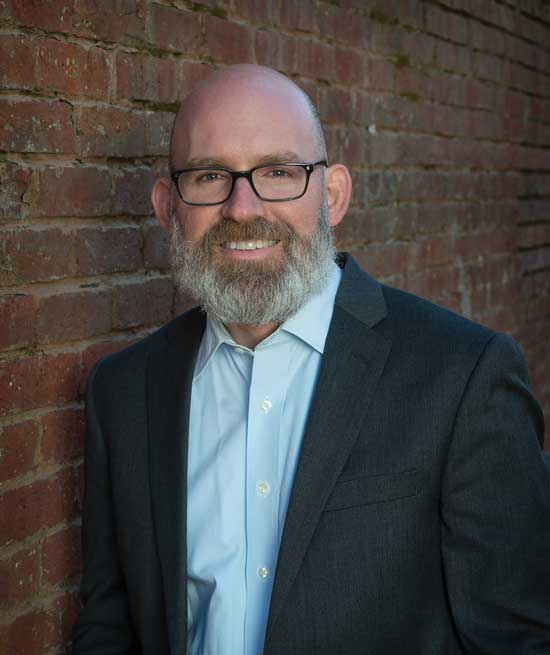
BINYAMIN APPELBAUM. (PHOTO: DJENNO BACVIC)
Just as economists learned to incorporate the growth of knowledge into their understanding of the world, just as they have—for the most part—accepted the need to wrestle with the imperfections of financial markets, so too they now are grappling in earnest with the complexities of distributional questions.
Yet as a careful observer of the discipline of economics—albeit as an outsider looking in through the windows—engagement with these questions seems to me still constrained by a number of factors. Many economists have enduring doubts about the importance of distributional issues. Many are reluctant to become engaged in what they see as normative questions. And intertwined with these doubts and misgivings is the discipline’s disregard for other forms of knowledge, and its lack of diversity.
The field’s long-standing indifference to the distribution of prosperity has come at the particular expense of minorities, and it is no great leap to suggest that a more diverse profession might reach different conclusions. To be sure, this is a premise that offends some economists. Milton Friedman famously insisted that the political views of good economists could not be discerned in their academic work. He lacked the self-awareness to see that his interests, methods, and conclusions were all informed by his life experience—and in this respect, Friedman was just like everyone else.
In some cases, greater diversity may yield greater clarity. In other cases, greater diversity may result in greater confusion, as new voices challenge old certitudes. But that is a kind of clarity too: it will tell us what we don’t know.
Equity vs efficiency
Inequality is an economic issue. A growing body of research illuminates its importance. The distribution of wealth and income has a meaningful influence on the distribution of opportunity, on the mechanics of the business cycle, and on the pace of innovation. Inequality also distorts public policy, increasing the power of rent-collecting elites and of those seeking aid, while attenuating the sense of shared purpose necessary for public investment in education, infrastructure, and research.
For decades, mainstream economists argued that efforts to address inequality through redistributive policies would come at the expense of growth—what Arthur Okun called “The Big Tradeoff.” But one silver lining to the rise of inequality over the past half century has been the opportunity to study the real-world impact. A number of recent studies, including work by Jonathan D. Ostry and his colleagues at the IMF (Ostry, Loungani, and Berg 2019), find that high levels of inequality actually impede growth.
Yet even among economists who regard this evidence as compelling, one encounters hesitation about incorporating distributional considerations into the advice professors give to policymakers. Economists have long conceived of their role in public policy debates as being “the partisan advocate for efficiency,” in the words of Charles Schultze, an advisor to Presidents Lyndon B. Johnson and Jimmy Carter. One reason is that in championing efficiency, economists think of themselves as representing the interests of the common man and woman. “Without economists in the room, it’s like a free-for-all where everybody is going for their narrow self-interest and there is no voice for efficiency. And what ‘efficiency’ really means is ‘every American citizen,’” said Michael Greenstone, a University of Chicago economist who worked in the Obama administration. The evidence of the past half century strongly suggests that simply advocating for efficiency does not produce the best outcomes for those ordinary men and women. But there is real value in the role, there isn’t anyone else likely to perform it, and therefore it’s reasonable to have some hesitation about the consequences of a diluted focus.
Furthermore, many economists profess a reluctance to meddle in what they regard as a political debate about the distribution of economic output. Quite often, the result is that economists finesse the question of distribution by noting that the benefits of more efficient policy could be distributed equitably, whatever that means, but the details should be worked out by the politicians. Paul Romer, a Nobel laureate in economics, argued in a recent essay (Romer 2020) that economists should just “say ‘No’ when government officials look to economists for an answer to a normative question.”
I recognize the appeal of Romer’s advice. Overconfidence is a common attribute in disciplines that reach for practical conclusions. Perhaps it is even a necessary one: after all, choices must be made. But there is an obvious attraction in limiting the scope of the potential damage.
The problem is that normative judgments can’t be avoided.
In the 1980s, for example, most mainstream economists favored the elimination of minimum wage laws. In 1987, my predecessors at the New York Times editorialized in favor of eliminating minimum wage laws, citing “a virtual consensus among economists that the minimum wage is an idea whose time has passed.” This was purely a judgment about economic efficiency. Economists did not pretend to weigh other arguments for minimum wages. But by advocating for a change in policy on the basis of efficiency, they implicitly devalued those arguments. (And, as it happened, even the efficiency argument was wrong. A few years later, two economists took the radical step of gathering evidence and reached a different conclusion. American workers are still suffering the consequences.)
Even economists who embrace in good faith the argument for avoiding distributional advice—especially economists who embrace this argument in good faith—must recognize that, in practice, they are facilitating the exclusion of distributional issues from public debate. A genuine concern about distributional issues requires distribution to be treated as a primary goal of policy, not as a by-product that requires remediation.
It is particularly problematic for economists to advocate for a policy as broadly beneficial if there is no mechanism for a broad distribution of benefits. Economists have often advocated for trade deals by calculating net benefits and deferring questions of distribution. But the second act seldom happens. “The argument was always that the winners could compensate the losers,” the economist Joseph Stiglitz, also a Nobel laureate, told me a few years ago. “But the winners never do.” Huffy, for example, built about 2 million bikes a year in the town of Celina, Ohio, until it moved production to China in 1998 to meet Walmart’s demand for cheaper bikes. There is now a Walmart where the Huffy workers once parked their cars, and everyone in Celina—and everyone in towns across the United States—can buy cheaper bicycles. But the workers lost their jobs, and promises of help went largely unkept. Advocacy for the interest of “the people,” in the abstract, often ends up looking a lot like cruel indifference to actual people.
Cross-pollination
The assertion here is not that economists should aspire to provide comprehensive guidance on the optimal distribution of economic output. They can’t. Cross-pollination with other disciplines has enriched economics, as in the incorporation of insights from psychology; from the work of demographers who look at the spatial dimension of economic activity; and from the examination of the evolution of economic ideas through time. But the goal ought not to be the creation of some hybrid super social science.
Rather, the need is to leave space for other perspectives. Economists can provide better guidance to policymakers by emphasizing the importance of distribution—and the importance of considering other kinds of knowledge.
A disturbing body of psychological research, for example, documents that economic inequality mimics the effects of absolute poverty on physical and mental health. This isn’t an insight that fits easily into economic models, nor does it need to. The key question is how to make sure that information is incorporated into decision-making alongside economic analysis.
There’s an old saying that there are two kinds of scientists: those trying to understand the world and those trying to change it. The nature of economics places it solidly in the second category, but economists don’t always seem to recognize the implications. Treating distributional issues as segregable is politically naive and therefore tends to limit the beneficial influence of economic ideas. The development economist Gustav Ranis observed that economists struggled to influence policy in many developing nations because they had their priorities backward. Economists emphasized efficiency as the most important goal of public policy while regarding political stability and distributional equity as benefits of the resulting growth. Ranis argued that the list should be reversed. People must agree that policies are equitable and conducive to stability before they are likely to support measures to increase efficiency.
That’s a powerful truth: no matter how well you think you understand the world, you still need to persuade others to listen.
BINYAMIN APPELBAUM is the author ofThe Economists’ Hour: False Prophets, Free Markets and the Fracture of Society and the lead writer on business and economics for the editorial board of the New York Times.
References:
Boushey, Heather. 2019. Unbound: How Inequality Constricts Our Economy and What We Can Do about It. Cambridge, MA: Harvard University Press.
Ostry, Jonathan D., Prakash Loungani, and Andrew Berg. 2019. Confronting Inequality: How Societies Can Choose Inclusive Growth. New York: Columbia University Press.
Payne, Keith B. 2017. The Broken Ladder: How Inequality Affects the Way We Think, Live, and Die. New York: Viking Penguin.
Romer, Paul. 2020. “The Dismal Kingdom: Do Economists Have Too Much Power?” Foreign Affairs (March/April).
Opinions expressed in articles and other materials are those of the authors; they do not necessarily represent the views of the IMF and its Executive Board, or IMF policy.