IMF ANNUAL Meetings Update | OCTOBER 12, 2022

In our recap for Wednesday, October 12, we spotlight the increased risk of fiscal crises amid turbulent bond markets, policies that can protect people from the cost-of-living crisis, the importance of strong state institutions for resilience, conversations with the central bank governors of Colombia and the Netherlands, and more. 

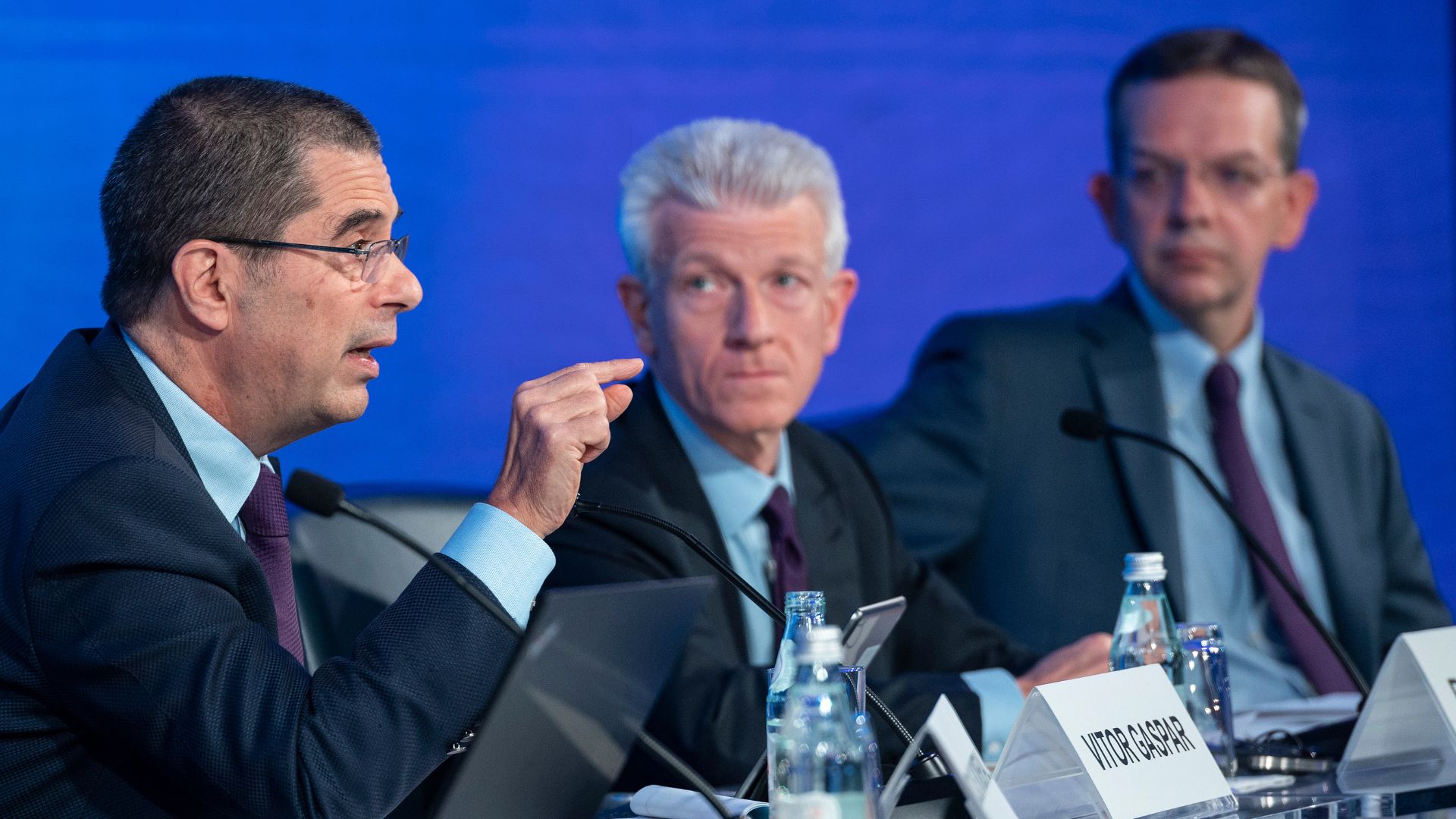
Gaspar Fiscal Monitor AM2022 
Fiscal Crises to Become More Frequent

Consistency between fiscal and monetary policy is paramount for economic and financial stability as high debts and deficits push more countries into budget crises, the director of the IMF’s Fiscal Affairs Department told a press conference. Government deficits fell from 9.7% of gross domestic product in 2020 to 4.7% in 2022, but debt and deficits are expected to remain above pre-pandemic levels, Vitor Gaspar said at the launch of the IMF’s latest Fiscal Monitor. Gaspar said policymakers face painful trade-offs as the global economy goes through turbulent times, but most countries should stay the course by tightening fiscal policy further.

 
Getting to net-zero

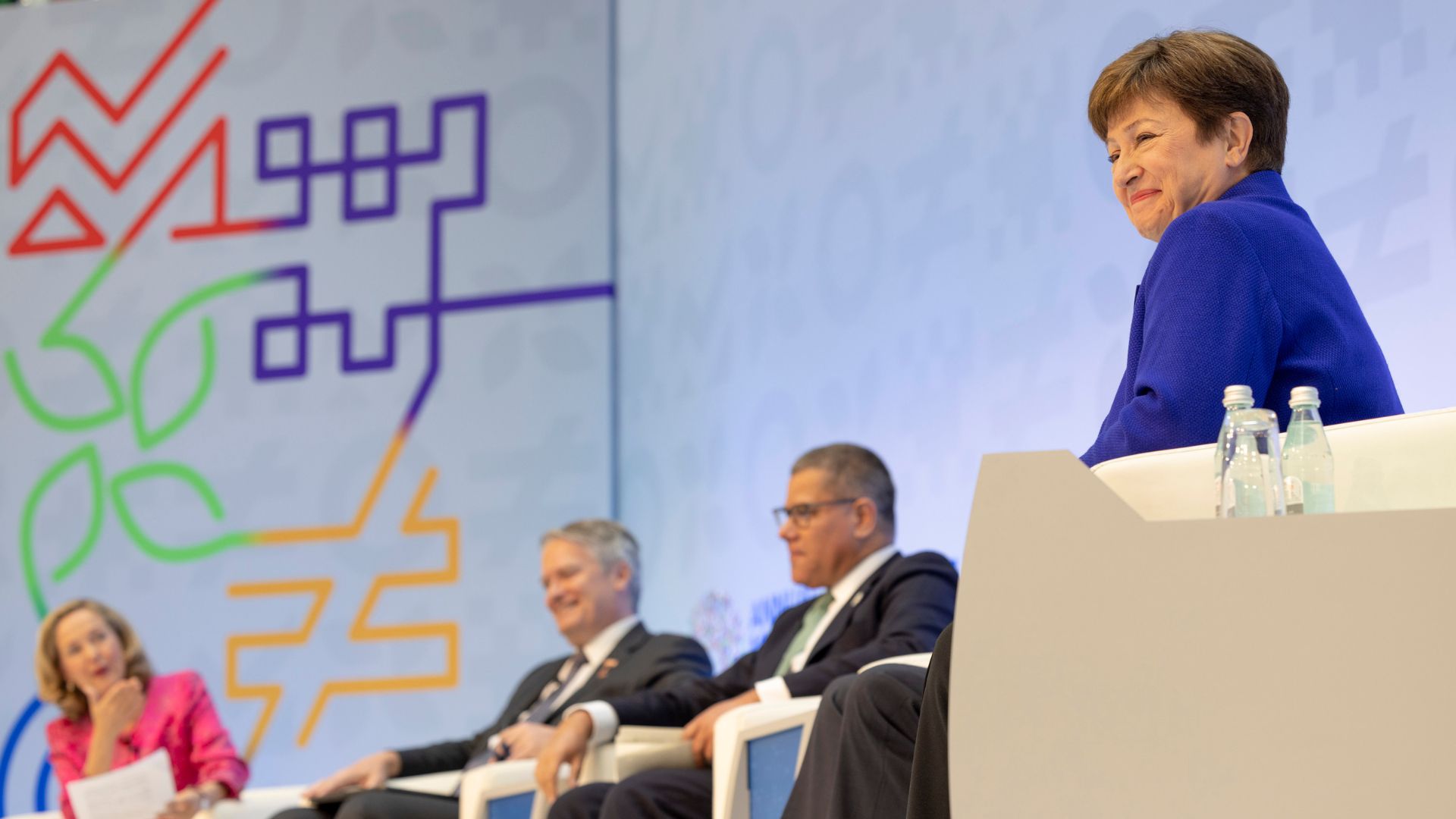
Climate action needs to be embedded into the purpose of multilateral development banks and international financial institutions that were created decades ago, said Alok Sharma, COP26 president, at a high-level seminar. Moderated by Spain’s First Deputy Prime Minister, Nadia Calviño, the panel also featured heads of the IMF, World Bank, OECD, and UNFCCC. Meeting the climate goals set under the Paris agreement requires an investment of $3-6 trillion per year. But the current investment stands at $630 billion—five to ten times less than what is necessary. “If we do not shift our trajectory this decade, we are cooked,” said the IMF's Kristalina Georgieva. Undoubtedly, cooperation between global, regional, and national actors is essential to fight climate crises but nothing is possible without climate financing.

A better tomorrow CD event 


Building Resilience for Today and Tomorrow

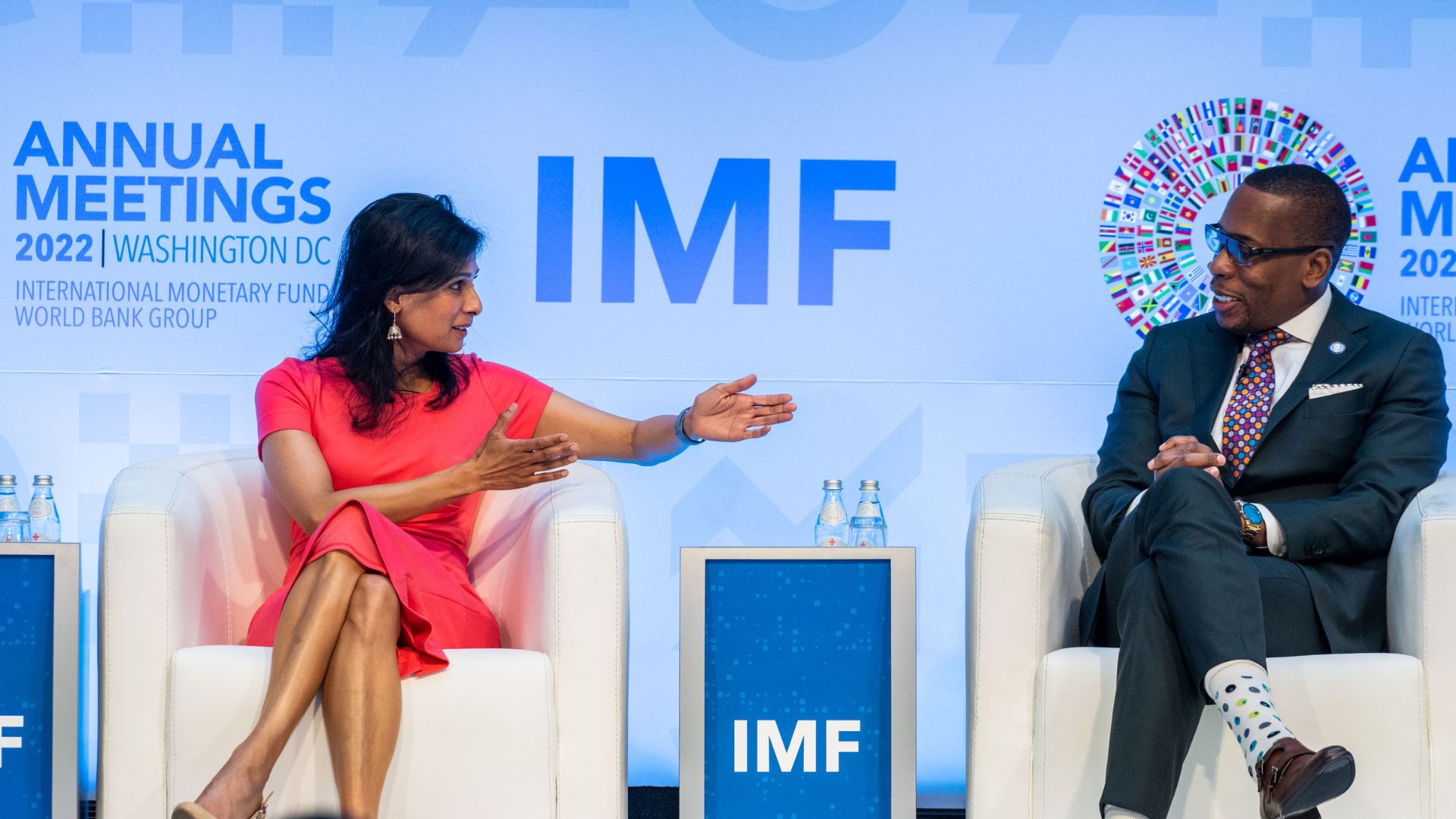
Strong state institutions and well-trained staff that can provide sound policy advice are always critical for navigating economic challenges, but this is especially true in today’s trying times, said IMF First Deputy Managing Director Gita Gopinath at a high-level capacity development talk on building resilience, moderated by the Director of the IMF’s Institute for Capacity Development, Dominique Desruelle. Governor Timothy Antoine of the Eastern Caribbean Central Bank described resilience as “the capacity to withstand and absorb shocks, recover, and bounce forward,” and in the context of the climate crisis emphasized the need to develop policymaking capacity in relevant areas in the Caribbean and other most-affected regions around the world.

Quote of the Day
Antoinette Sayeh

Many countries need debt relief, there is no question about it. But for debt relief to be impactful, countries also need to address difficult issues, such as better governance, more transparency, and structural fiscal issues. 

ANTOINETTE M. SAYEH, DEPUTY MANAGING DIRECTOR, IMF

SEMINAR PUTTING PEOPLE FIRST 
Putting People First

Governments face difficult policy choices as they cope with multiple crises under tight budgets, but only a people-first approach will ultimately succeed, panelists told an IMF seminar. Poor households in low-income countries are the most affected by soaring food prices, the IMF’s Antoinette Sayeh said, spending about 44% of their budget on food compared with 16% in advanced economies. Governments should not just rationalize spending but also reprioritize it to privilege spending that lessens the crisis impact on the poor. But policymakers need the support of the people to take reforms forward, or they risk social unrest. 

Capacity Development Talks | Data Transparency and Fiscal Sector Resilience 
transparency AND RESILIENCE

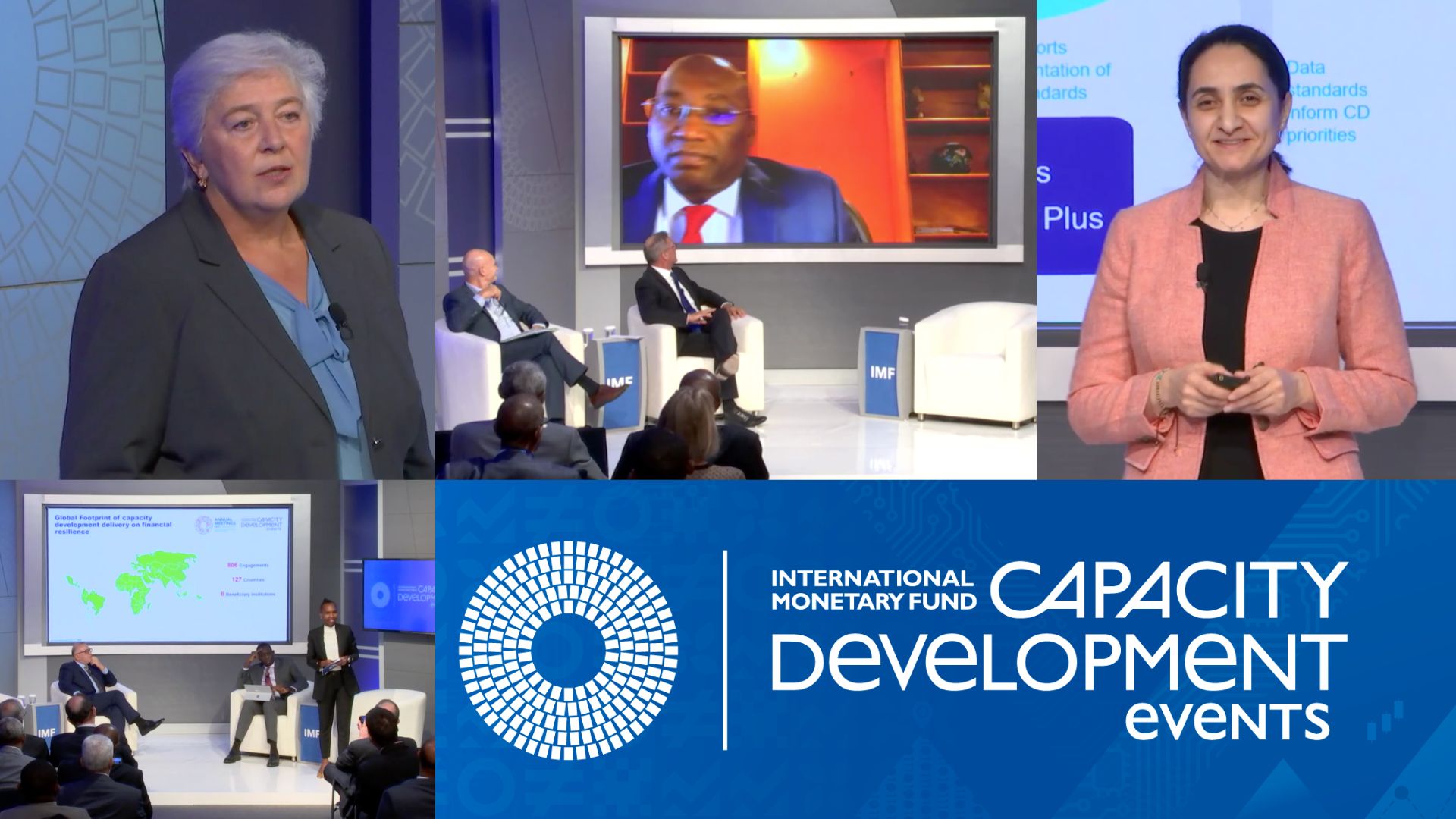
Data transparency has become more critical in the face of heightened fiscal challenges, Lusine Lusinyan of the IMF’s Statistics Department told one of two capacity development sessions. “Enhanced transparency helps reduce uncertainty about the economic developments in countries and lowers risk premiums when countries access financial markets.” The event showcased the IMF’s latest Data Standards Initiatives, designed to provide a tailored framework for helping members strengthen data transparency practices.

During a session on financial resilience, panelists focused on the partnership between IMF capacity development and countries to strengthen governments’ abilities to respond to urgent financial sector needs during disruption and change. Koba Gvenetadze, Georgia’s central bank governor, said of working with IMF experts: “We receive high-quality analysis from the best experts in different areas at the same time. We know that it's not going to be just one size fits all.”

Number of the Day

91%
global government debt

Global government debt is projected to be 91% of GDP in 2022, 7.5 percentage points above pre-pandemic levels, despite a recent reduction in the ratio for many countries.
Learn more
ECB policy Klaas Knot and Alfred Kammer 
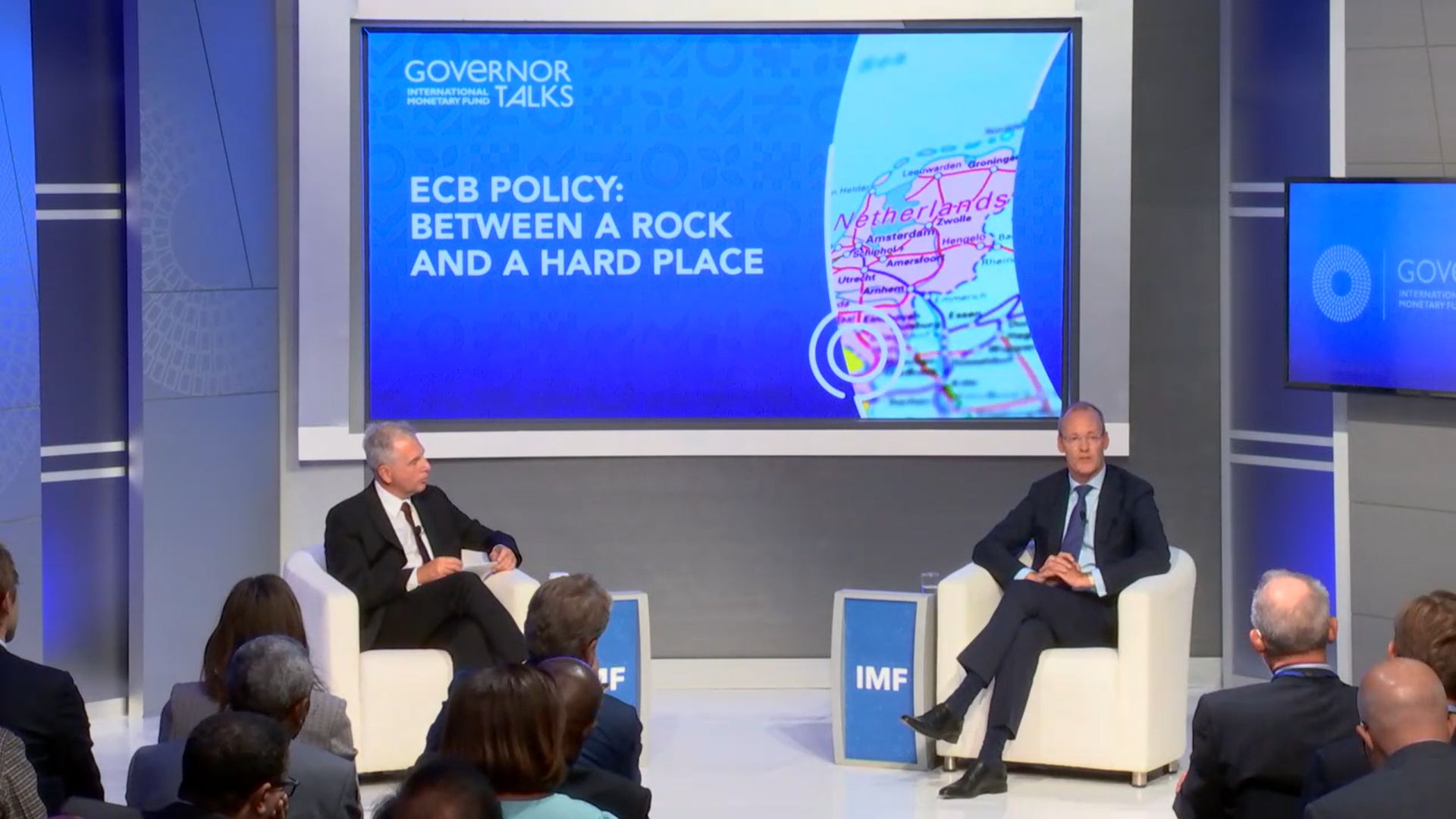
Governor Talks: ECB Needs More Rate Hikes

The European Central Bank (ECB) needs at least two significant interest rate hikes before it hits the neutral level, Dutch central bank president and ECB policymaker Klaas Knot told a Governor Talk, moderated by the IMF’s Alfred Kammer.“I have no indication that with steps up to 75 basis points we would not be able to achieve our price stability mandate of 2% inflation over the medium-term,” added Knot. Although there are no “convincing” signs of a wage-price spiral yet in the euro area, Knot said that calls from workers to be compensated for loss in purchasing power are growing stronger. “We do believe there is room for such one-off adjustment in wages if you also realize that corporate profit margins are at a record high or at least historically very-very high.”

 
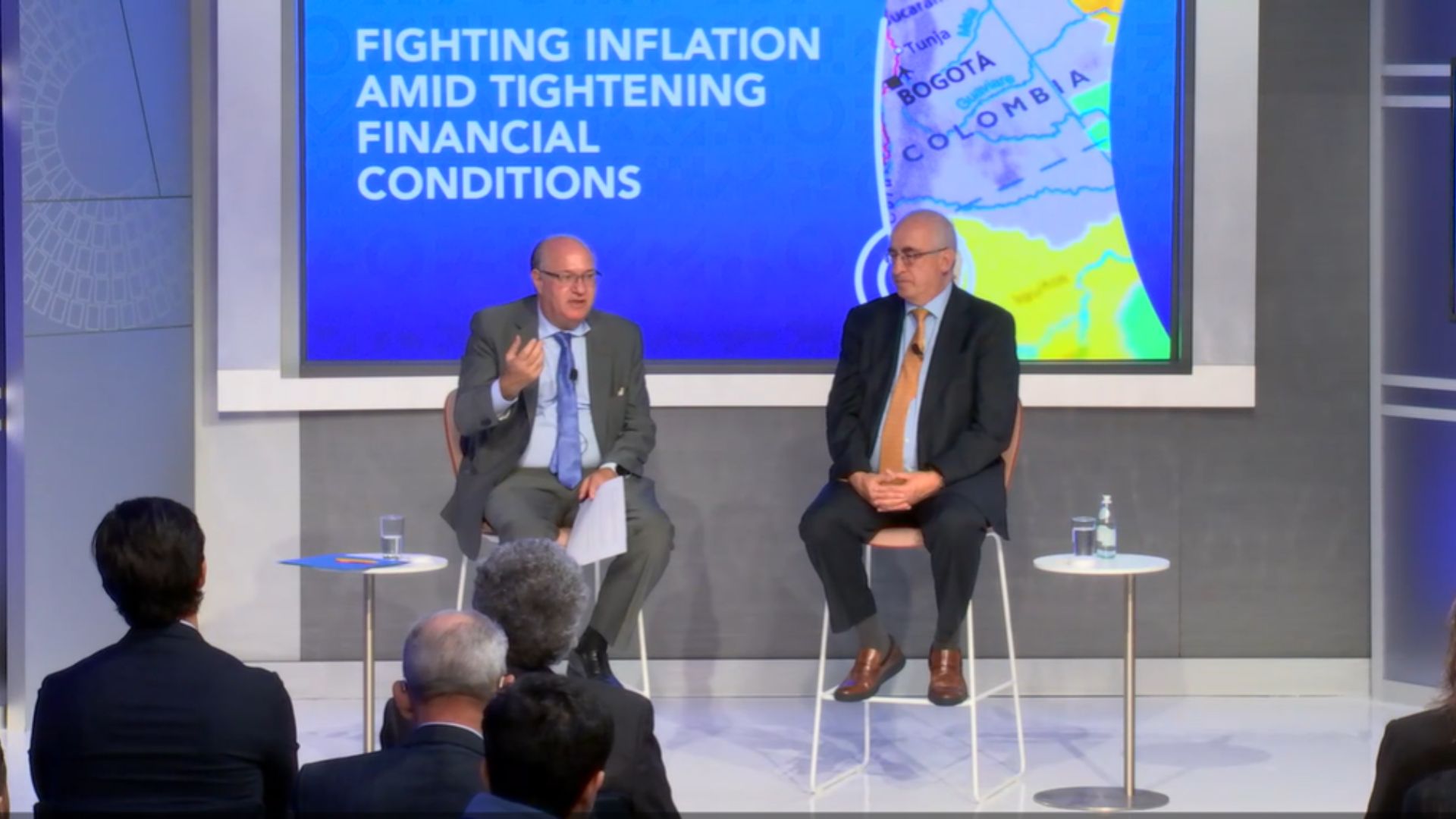
Governor Talks: Colombia Fighting Inflation

Colombia will see one of the world's highest GDP growth rates this year, but it also faces a 27% increase in food prices—7% above its peers. This makes monetary policy even more challenging, explains Colombia’s central bank governor Leonardo Villar, as countries in Latin America begin to cope with more difficult and tighter financial conditions. To fight inflation, the central bank has already raised its interest rates to 10% from 1.75% a year ago—and is prepared to raise them further. “We know the cost of inflation—we want to avoid the situation where we were 25 years ago.”

BEHIND-THE-SCENES
 

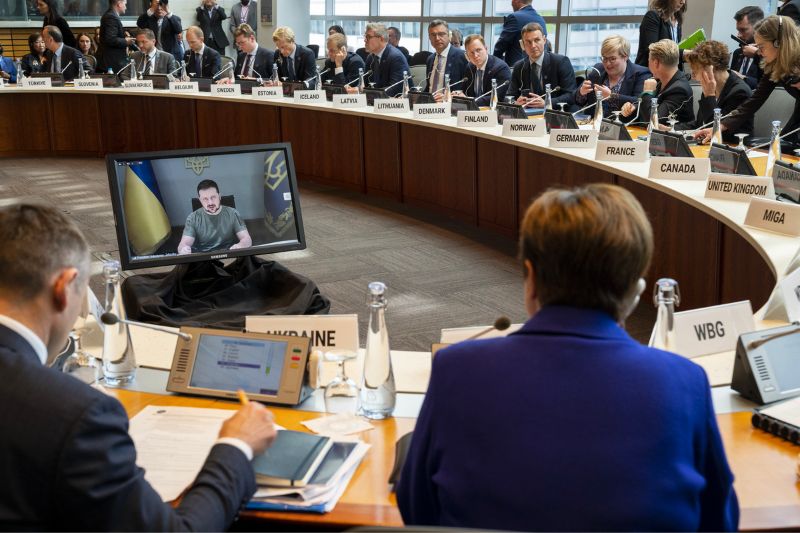
IMF Managing Director Kristalina Georgieva attends the second ministerial roundtable, co-chaired by the Government of Ukraine, the IMF, AND the World Bank Group. 

Lagarde and Froman 

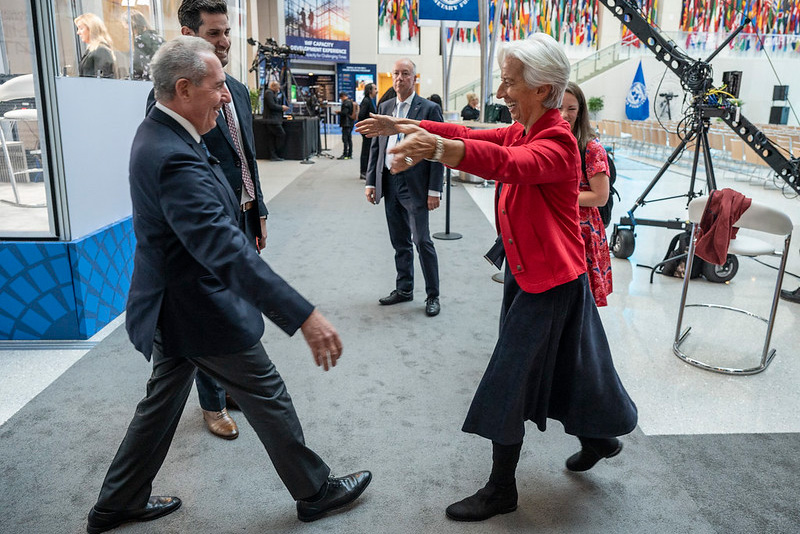
Michael Froman, Vice Chairman and President of Strategic Growth for Mastercard, greets Christine Lagarde, President of the European Central Bank in the atrium of the IMF headquarters.

Preparing for a better today and tomorrow green room 

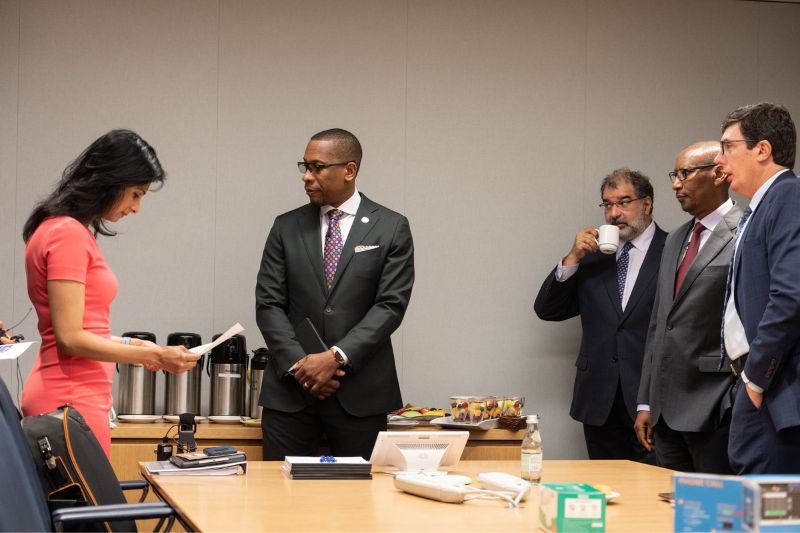
Panelists finish their last preparations in the green room before the High-Level Capacity Development Talk: Building Resilience for Today and Tomorrow.

Upcoming Events
Governor Talk
Governor Talk - Singapore: Navigating Policies During Times of Great Uncertainties

October 13, 10:00 AM ET

Ravi Menon, Managing Director of the Monetary Authority of Singapore talks to Krishna Srinivasan, Director Asia and Pacific Department, IMF

Event Details
New Economy Forum
New Economy Forum: Transforming Fiscal Policy Through Digital Public Infrastructure

October 13, 11:30 AM ET

This session will discuss the opportunities and challenges with Digital Public Infrastructure with key speakers from government, development partners and IMF staff.

Event Details
 
IMF Seminar: Debate on the Global Economy

October 13, 2:00 PM ET

Policymakers face the tough choice of cooling the world economy to tame inflation at a time when growth is already weakening. Join the CNN Global debate to hear more at this critical hour for the world economy.

Event Details