• IMF Live
International Monetary FundInternational Monetary Fund

Loading component...

IMF Administrative Tribunal: Reports on the 30th Anniversary Conference

imfat hero image

Related Links

  • IMF Administrative Tribunal Home Page
  • New Search Tool for Tribunal Judgments and Orders
  • Composition of the Tribunal
  • Statute of the Administrative Tribunal
  • Commentary on the Statute
  • Resolutions of the Board of Governors
  • Rules of Procedure
  • Code of Judicial Conduct
  • Pending Cases
  • Judgments
  • Orders
  • News Alerts
  • Volumes of IMFAT Reports
  • Index of Judgements and Orders
  • Revised Decision on the Protection of Privacy and Method of Publication
  • Tribunal’s Operations During Pandemic
  • IMFAT 30th Anniversary Conference
  • Reports on IMFAT 30th Anniversary Conference
  • See also: IMF Staff Ethics, Financial Disclosure, and Resolution of Staff Disputes
facebook sharing
twitter sharing
email sharing
copy sharing
print sharing

Loading component...

Loading component...

  • About
      • IMF’s Work

      • IMF at a Glance
      • Surveillance
      • Lending
      • Capacity Development
      • IMF Factsheets List
      • How the IMF Supports the Global Economy
      • RESOURCES

      • IMF Members
      • IMF Finances
      • IMF Financial Statements
      • IMF Senior Officials
      • IMF in History
      • Archives of the IMF
      • Job Opportunities
      • TOPICS

      • Artificial Intelligence
      • Fintech
      • Fiscal Policies
      • Governance and Anti-Corruption
      • All Topics
  • Research
      • Flagship Publications

      • World Economic Outlook
      • Global Financial Stability Report
      • Fiscal Monitor
      • External Sector Report
      • Other Publications

        • Staff Discussion Notes
        • Working Papers
        • IMF Research Perspectives
        • Economic Review
        • Commodity Prices
        • Commodities Data Portal
        • IMF Researchers
        • Annual Research Conference
        • Other IMF Events
  • Countries
      • IMF reports and publications by country

        • A
        • B
        • C
        • D
        • E
        • F
        • G
        • H
        • I
        • J
        • K
        • L
        • M
        • N
        • O
        • P
        • Q
        • R
        • S
        • T
        • U
        • V
        • Y
        • Z
        • IMF Resident Representative Offices
        • IMF Regional Reports
        • IMF and Europe
        • IMF Members' Quotas and Voting Power, and Board of Governors
      • Regional Offices

      • IMF Regional Office for Asia and the Pacific
      • IMF Capacity Development Office in Thailand (CDOT)
      • IMF Office in the Pacific Islands
      • IMF Europe Office in Paris and Brussels
      • IMF Regional Office for Central, Eastern and Southeastern Europe
      • IMF Regional Office in Riyadh
      • IMF Regional Office in Central America, Panama, and the Dominican Republic
      • Eastern Caribbean Currency Union (ECCU)
  • Capacity Development
      • ABOUT

      • Our Work
      • Our Regional Capacity Development Centers
      • Our Thematic & Country Funds
      • Our Partners
      • TRAINING

      • About Training
      • Training for Government Officials
      • Online Learning
      • PUBLICATIONS

      • Country-Level Technical Assistance Reports
      • High-Level Summary Technical Assistance Reports
  • News
      • All News

        • IMF Live
        • Country Focus
        • Chart of the Week
        • Communiqués
        • Mission Concluding Statements
        • Press Releases
        • Speeches
        • Statements at Donor Meetings
        • Transcripts
        • Views & Commentaries
      • See Also

      • IMFBlog
      • Article IV Consultations
      • Financial Sector Assessment Program (FSAP)
      • Seminars, Conferences, & Other Events
      • E-mail Notification
      • For Journalists

      • Press Center

        The IMF Press Center is a password-protected site for working journalists.

      • Login or Register
      • Information of interest
  • Videos
      • IMF Live
      • About the IMF
      • Conferences
      • Press briefings
      • Speeches
      • Special Features
      • Africa
      • Americas
      • Asia
      • Europe
      • Middle East and Central Asia
      • Economic Outlook
      • Annual and spring meetings
      • Capacity Development
      • Most Recent
      • Most Popular
  • Data
      • IMF Data Portal
      • World Economic Outlook Databases
      • AI Preparedness Index
      • Macroeconomic Climate Indicators Dashboard
      • IMF Finances
      • Standards for Data Dissemination
      • International Financial Statistics
      • Financial Access Survey
      • G20 Data Gaps Initiative
      • Currency Composition of Official Foreign Exchange Reserves
      • World Revenue Longitudinal Data
  • Publications
      • RESOURCES

      • Publications Advanced Search
      • IMF eLibrary
      • IMF Bookstore
      • Publications Newsletter
      • Essential Reading Guides
      • FLAGSHIPS

      • World Economic Outlook
      • Global Financial Stability Report
      • Fiscal Monitor
      • External Sector Report
      • Regional Economic Reports
      • KEY SERIES

      • Country Reports
      • Departmental Papers
      • Policy Papers
      • Books
      • Selected Issues Papers
      • IMF NOTES

      • IMF Notes
      • How-To Notes
      • Technical Notes and Manuals
      • Staff Discussion Notes

Reports on the 30th anniversary conference of the IMF Administrative Tribunal 

November 19, 2025

The 30th Anniversary Conference of the Administrative Tribunal of the International Monetary Fund (IMFAT) was held on November 19, 2025, in Washington, DC.

More than 200 distinguished guests from the international law world, including judges, registrars, practitioners and academics participated in the Conference, debating the Conference theme: International Administrative Law in Changing and Challenging Times.

The conference program featured opening remarks, three panel discussions by renowned international administrative law experts from North America, Latin America, Africa, Europe, the MENA region, and Asia.

Panel 1 focused on the sources of international administrative law, including the law applied by international administrative tribunals (IATs), administrative practice as a source of international administrative law (IAL), precedent and IATs, and the International Law Commission’s work on the settlement of disputes to which international organizations are parties. Panel 2 explored recent developments in international administrative law, including developments and possible reforms concerning the jurisdiction of IATs as well as reliance on human rights law in IAL litigation. Panel 3 addressed immunities of international organizations, the independence of IATs, and the selection of IAT members. The panels and discussions concluded with Closing Remarks and a social hour.

Introducing the conference, Judge Nassib G. Ziadé, President of the IMF Administrative Tribunal, placed the Tribunal’s 30th anniversary conference within a wider tradition of tribunal anniversary gatherings that promote exchange, cooperation, and the cross-fertilization of ideas between all IAL actors. He also welcomed the participation and support of the American Society of International Law (ASIL) and the Société française pour le droit international. Judge Ziadé emphasized the broad harmonization of principles in the IAL jurisprudence, while recognizing the need to respect each institution’s statutory framework and operational context. Judge Ziadé also observed that the proliferation of administrative tribunals has not produced the feared jurisprudential fragmentation, thanks to shared principles, experienced judges, and careful comparative referencing. He recalled IMFAT’s institutional history, acknowledged the contributions of past and present judges, registrars, General Counsels, and the Staff Association, and highlighted recent improvements in transparency and accessibility. He concluded by reaffirming the IMFAT’s role in strengthening the Fund’s mission, protecting individual rights, ensuring due process, and contributing to the broader development of international administrative justice.

Judge Nassib G. Ziadé delivering his opening remarks at the start of the IMFAT’s 30th anniversary conference

Mélida Hodgson, President of the American Society of International Law (ASIL), expressed ASIL’s appreciation to be participating in IMFAT’s 30th anniversary and situated ASIL’s involvement within its longstanding mission to advance international law through scholarship, dialogue, and convening. Ms. Hodgson emphasized ASIL’s role as a forum for exploring the responsibility of international organizations and noted that the IMFAT exemplifies judicial accountability by ensuring fairness, good faith, and due process in staff matters. She observed that international administrative tribunals often receive scant attention in legal education and scholarship, notwithstanding their importance to the architecture of the international rule of law. Recognizing the role of IATs broadens professional dialogue and promotes a better understanding of law operating beyond sovereign states. Ms. Hodgson highlighted the close partnership between ASIL and the IMFAT, recalling earlier anniversary collaboration and noting the personal and institutional links between ASIL leaders and members of the Tribunal. She concluded that, in a period of renewed challenges to international law and the rule of law, the IMFAT’s independence, jurisprudence, and procedural safeguards contribute meaningfully to accountability, fairness, and the legitimacy of international institutions.

Opening - Melida Hodgson
Mélida Hodgson addressing the audience at the outset of the IMF Administrative Tribunal’s 30th anniversary conference

Nicola Bonucci, Vice-President of the Société française pour le droit international (French Society of International Law or SFDI), congratulated the IMFAT on its 30th anniversary and noted the SFDI’s longstanding interest in international organizations and international administrative law and its regular organization of, and participation in, events on these topics. Drawing on his own experience before international administrative tribunals, Mr. Bonucci emphasized their professionalism and the importance of collaboration among international law institutions in challenging times. He recalled historical debates on the independence of international civil servants and stressed that administrative tribunals help safeguard the autonomy and legitimacy of international organizations. He identified the balance between organizational immunity and individual access to justice as a central contemporary challenge, illustrated by current litigation involving the European Space Agency before the French courts. Mr. Bonucci concluded by underscoring the tribunals’ role in protecting the integrity of international organizations, in particular in the event of staff misconduct allegations, and in making justice effective, transparent and fair.

Opening - Nicola Bonucci
Nicola Bonucci delivering opening remarks at the start of the IMFAT’s 30th anniversary conference

Dr. Olufemi Elias, Judge ad hoc at the International Court of Justice, President of the OPEC Fund Administrative Tribunal, and Chairman of the Administrative Tribunal of the Islamic Development Bank, congratulated the IMFAT on its 30th anniversary. Dr. Elias addressed the complex relationship between international administrative law and public international law, suggesting that international administrative law is best classified and understood as a specialized branch of public international law. He emphasized the treaty foundations of international administrative law, relying in particular on ICJ advisory opinions recognizing the legality and necessity of administrative tribunals within international organizations. Dr. Elias illustrated the close operational relationship between public international law and international administrative law by reference to tribunal case law involving general principles, treaties, customary international law, human rights instruments, and rules of treaty interpretation. He concluded that doctrinal debates over classification have not impeded adjudication, and that the IMFAT’s anniversary marks an important stage in the continuing development of international administrative law and its relationship with public international law.

Opening - Judge Femi Elias 01
Dr. Olufemi Elias delivering opening remarks at the start of the IMFAT’s 30th anniversary conference

A report on the opening remarks is available here.

The introductory remarks were followed by Session 1 of the conference, which focused on the sources of international administrative law. The session was moderated by Professor John R. Crook, International Arbitrator and former Judge at the NATO Administrative Tribunal (NATOAT). The speakers were Judge Maria Vicien Milburn, Judge at the European Bank for Reconstruction and Development Administrative Tribunal (EBRDAT), the Inter-American Development Bank Administrative Tribunal (IDBAT) and the IMFAT; Me Rémi Cèbe, Partner at Sicault & Cèbe, A.A.R.P.I., and Lecturer at the Université Paris 2 Panthéon-Assas; Brian Patterson, Deputy General Counsel, Legal Department, IMF; Judge Raul Pangalangan, President of the Administrative Tribunal of the Asian Development Bank, Judge at the World Bank Administrative Tribunal (WBAT), and former Judge at the International Criminal Court; Mercedes Carrillo, Secretary, Administrative Tribunal of the Organization of American States (OASAT); Paul Jean Le Cannu, Registrar, IMFAT; and Professor August Reinisch, Professor at the University of Vienna, and Special Rapporteur of the International Law Commission of the United Nations on “the settlement of disputes to which international organizations are parties.” The Rapporteur for Session 1 was Anna Holloway, Senior Legal Counsel, International Centre for Settlement of Investment Disputes (ICSID). Ms. Holloway’s report on Session 1 can be found here.

Professor John R. Crook moderating Session 1
Judge Vicien Milburn discussing the applicable law before international administrative tribunals
Me Rémi Cèbe discussing the applicable law before international administrative tribunals
Brian Patterson discussing administrative practice as a source of international administrative law
Judge Raul Pangalangan discussing administrative practice as a source of international administrative law
Mercedes Carrillo presenting on precedent and international administrative tribunals
Paul Jean Le Cannu presenting on precedent and international administrative tribunals
Professor August Reinisch presenting the work of the International Law Commission of the United Nations on “the settlement of disputes to which international organizations are parties”
Discussions among Professor John R. Crook, Judge Vicien Milburn, Me Rémi Cèbe, Brian Patterson, Judge Raul Pangalangan, and Anna Holloway during Session 1 (from left to right)
Discussions among Professor John R. Crook, Professor August Reinisch, Mercedes Carrillo, Paul Jean Le Cannu, and Anna Holloway during Session 1 (from left to right)

Additional pictures of Session 1 panelists and Q&A conference participants

Professor John R. Crook moderating session 1
Judge Raul Pangalangan and Anna Holloway in Session 1 discussions
Discussions among Professor John R. Crook, Judge Vicien Milburn, Me Rémi Cèbe, Brian Patterson, Judge Raul Pangalangan, and Anna Holloway during Session 1 (from left to right)
Discussions among Professor John R. Crook, Professor August Reinisch, Mercedes Carrillo, and Paul Jean Le Cannu during Session 1 (from left to right)
Professor August Reinisch presenting during Session 1
Q&A after Session 1
Q&A after Session 1
Q&A after Session 1
Q&A after Session 1

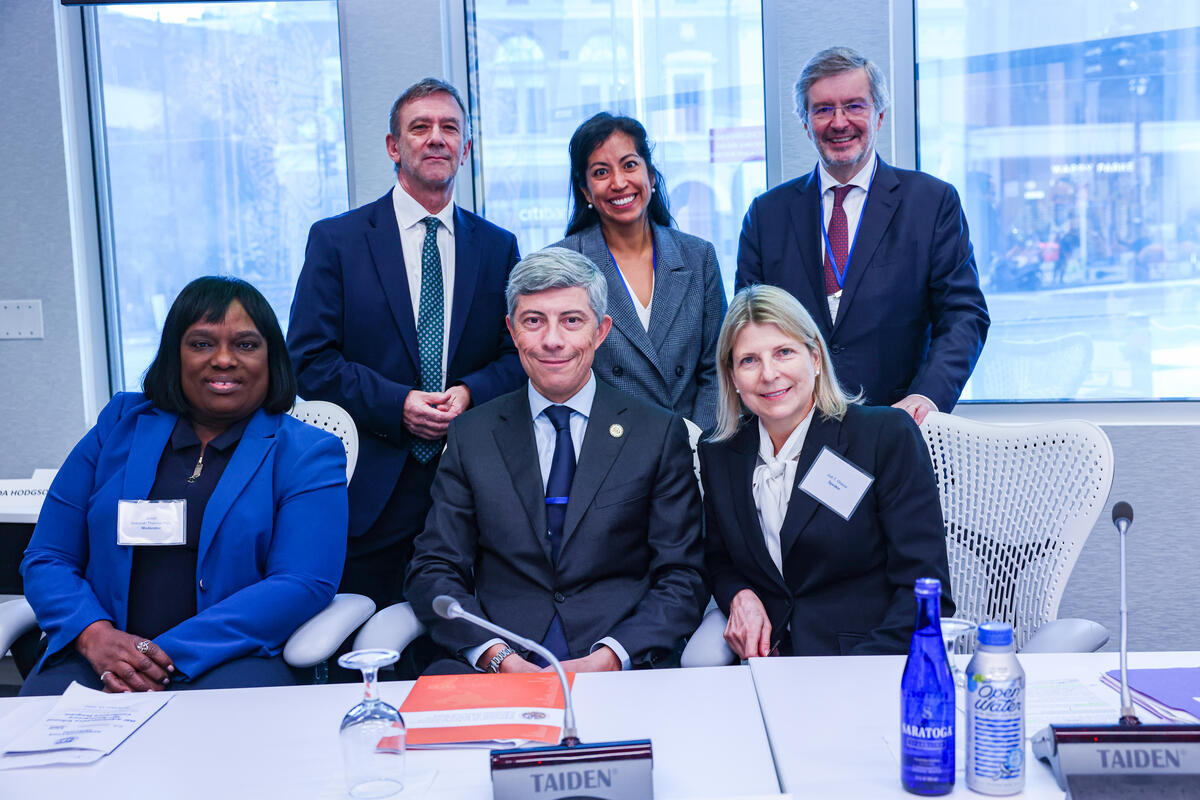
Session 2 of the conference addressed Recent Developments in International Administrative Law. The session was moderated by Judge Deborah Thomas-Felix, Judge at the IMFAT. The speakers were Judge Joan Powers, Judge at the EBRDAT and the Appeals Tribunal of Gavi, the Vaccine Alliance, and Chair of the Appeal Board of the World Intellectual Property Organization; Judge Thomas Laker, Judge at the WBAT, NATOAT, Administrative Tribunal of the Council of Europe (ATCE), and EBRDAT; Juliet E. Johnson, Registrar, UNAT; Judge Celia Goldman, Judge at the European Stability Mechanism Administrative Tribunal (ESMAT), former Registrar of the IMFAT; Judge Pablo Sandonato de León, President of the OASAT; Jodi T. Glasow, Executive Secretary, World Bank Sanctions Board; Judge Kieran Bradley, Judge at the IMFAT, IDBAT, and ESMAT; and Judge Paul Lemmens, Chair of the ATCE. The Rapporteur for Session 2 was Véronique Truchon-Lachapelle, Legal Officer, UNAT. Ms. Truchon-Lachapelle’s report on Session 2 can be found here.

Judge Deborah Thomas-Felix moderating Session 2
Judge Joan Powers presenting on whether IATs should be granted jurisdiction not only over challenges to individual decisions but also over direct challenges to regulatory decisions
Judge Thomas Laker discussing with Judge Joan Powers whether IATs should be granted jurisdiction not only over challenges to individual decisions but also over direct challenges to regulatory decisions
Juliet E. Johnson presenting information about the UNAT’s experience in 2024
Judge Celia Goldman discussing appeals systems in international administrative law
Judge Pablo Sandonato de León discussing whether the jurisdiction of IATs should extend to a wider range of subject-matters
Jodi T. Glasow discussing how international organizations such as the World Bank address and resolve non-employment matters without extending the jurisdiction of their IATs
Judge Paul Lemmens discussing emerging trends and human rights before IATs
Judge Kieran Bradley discussing emerging trends and human rights before IATs
Session 2 panel discussions including Judge Deborah Thomas-Felix, Judge Joan Powers, Judge Thomas Laker, Judge Celia Goldman, Juliet E. Johnson and Véronique Truchon-Lachapelle (from left to right)
Session 2 panel, Judge Deborah Thomas-Felix, Judge Pablo Sandonato de León, Jodi T. Glasow (from left to right, sitting), Judge Kieran Bradley, Véronique Truchon-Lachapelle and Judge Paul Lemmens (from left to right, standing)

Additional pictures of Session 2 panelists and conference participants

Session 2 panel discussions including Judge Deborah Thomas-Felix, Judge Pablo Sandonato de León, Jodi T. Glasow, Judge Kieran Bradley, Judge Paul Lemmens, and Véronique Truchon-Lachapelle (from left to right)
Judge Sandonato de Léon and Jodi T. Glasow in preparation for Session 2
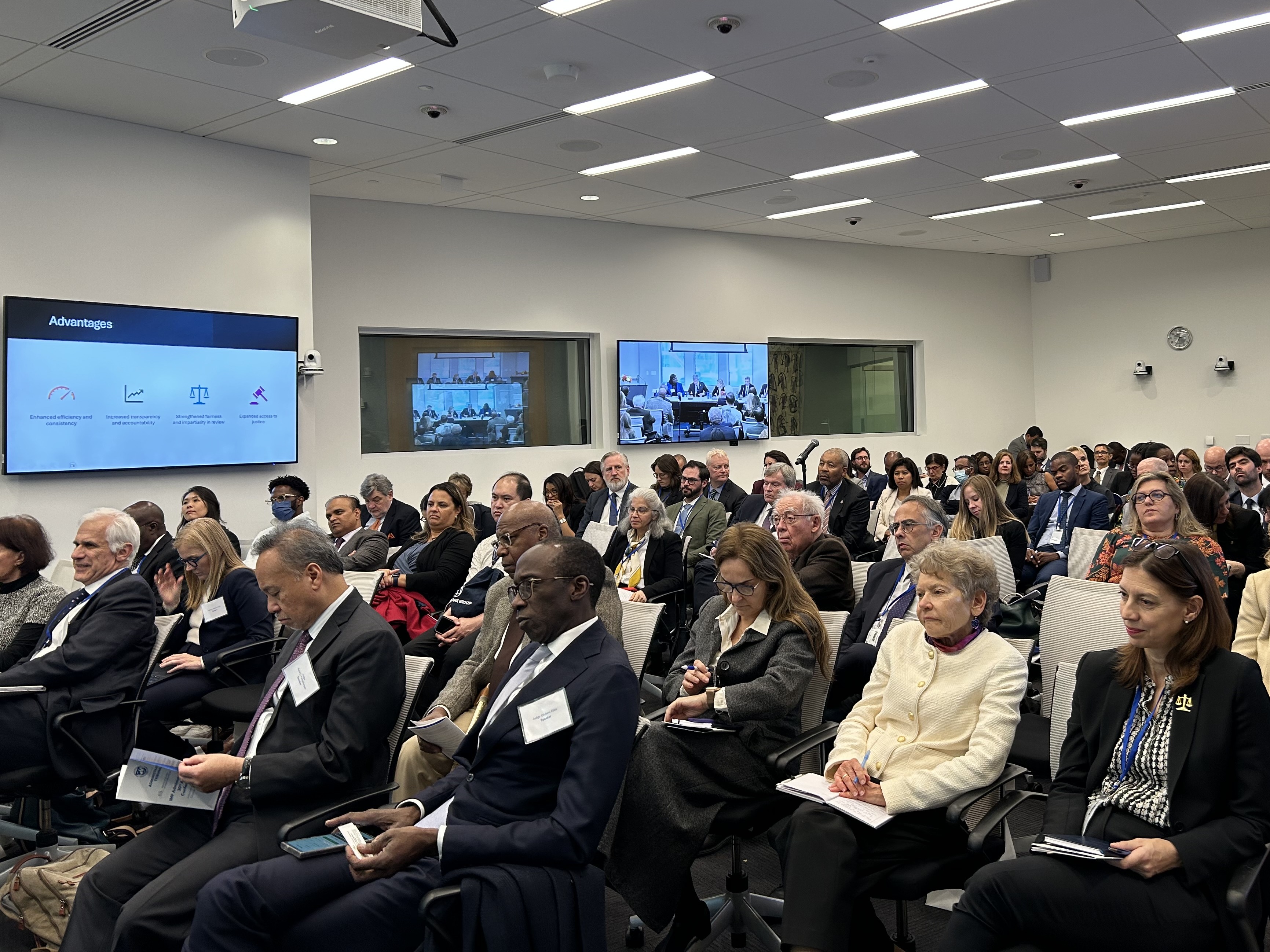
Audience during Session 2 panel discussions

Session 3 of the conference explored the issues of immunities of international organizations, independence of international administrative tribunals, and selection of members of these tribunals. The session was moderated by Judge Andrew K.C. Nyirenda, Judge of the IMFAT. Judge Ziadé opened the session with a keynote speech, followed by remarks and comments by Professor Peter Bekker, Partner at Thompson Hine LLP, New York and Chair of International Law at the Centre for Energy, Petroleum and Mineral and Policy, University of Dundee, UK; Kathryn Nelson-Indre, Chair of the Staff Association Committee, IMF; and Yan Liu, General Counsel and Director, Legal Department, IMF. The Rapporteur for Session 3 was Salim S. Sleiman, International Law Fellow, ASIL. Mr. Sleiman’s report on Session 3 can be found here. 

Judge Andrew K.C. Nyirenda moderating Session 3
Judge Andrew K.C. Nyirenda moderating Session 3.
Judge Nassib Ziade 01
Judge Nassib G. Ziadé delivering a keynote speech on national court intervention and the evolution of immunities of international organizations, the possible implications of such intervention for internal justice in these organizations, the appointment and tenure of IAT judges, the independence of registrars and tribunal secretariats, and the operational and structural guarantees of tribunal independence
In his remarks, Professor Peter Bekker focused on the legal foundations of international organization immunity and the independence of international administrative tribunals, drawing on the second edition of his book, The Legal Position of Intergovernmental Organizations: A Functional Necessity Analysis of Their Legal Status and Immunities, published by Brill Nijhoff in 2025
Yan Liu focused on two central themes: the importance of the IMF’s immunities for its institutional independence and the essential role played by the Administrative Tribunal in upholding the rule of law within the Fund
Kathryn Nelson-Indre framed her remarks from the perspective of the staff, focusing on the themes of immunity, independence, trust, and institutional accountability

Additional pictures of Session 3 panelists

Session 3 panel discussions among Judge Andrew K.C. Nyirenda, Judge Nassib G. Ziadé, Professor Peter Bekker, Yan Liu, Kathryn Nelson-Indre, and Salim S. Sleiman (from left to right)
The Session 3 panel, from left to right: Judge Andrew K.C. Nyirenda, Kathryn Nelson-Indre, Judge Nassib G. Ziadé, Yan Liu, Professor Peter Bekker, and Salim S. Sleiman

Closing Remarks were delivered by Professor Edith Brown Weiss, Georgetown University Law School, former Judge of the IMFAT and former President of IDBAT, former Chair of the World Bank Inspection Panel, and former President of ASIL. Professor Brown Weiss conveyed regrets and warm regards on behalf of Professor Sean Murphy, George Washington University Law School, Honorary Vice-President of ASIL, who was unable to attend the full conference.

Professor Brown Weiss emphasized accountability as a core element of the legitimacy and effectiveness of international administrative tribunals. She identified the consolidation of tribunals, the development of international administrative law as a distinct body of law, judicial specialization in the field of IAL, declining multilateralism, and the impact of artificial intelligence as key issues likely to shape the future of these tribunals. She concluded by reaffirming the fundamental purpose of administrative tribunals in being the voice of international civil servants and adapting to changing political, technological, and societal conditions.

Professor Edith Brown Weiss delivering her closing remarks

A report on Professor Edith Brown Weiss’s closing remarks is available here.

Concluding the conference, Judge Nassib G. Ziadé thanked all speakers, participants, and organizers and invited attendees to a reception marking the close of the event.

Judge Nassib G. Ziadé sharing final thoughts and thanking all participants

Additional pictures of panelists and conference participants

Audience 03
Audience 15
Audience 14
Audience 13
Audience 07
Audience 01
Audience - Judge Deborah Thomas-Felix and Kieran Bradley
Audience 05
Audience 04
Break - Conf Participants 07
Break - Conf Participants 04
Break - Judge Joan Powers Fr Gianviti Yan Liu
Break - Conf Participants 05
Break - Judge Nassib Ziade and Paul Jean
Break - Judge Bradley
Break - Conf Participants 09
Break - Conf Participants 08
Break - Conf Participants 06
Break - Conf Participants 03
Break - Conf Participants 02
Break - Conf Participants 01
Break - Celia Goldman and Maureen
Break - Judge Paul Lemmens and ATCE DSG
Toni Pryia Maureen

The team at the Registry of the IMF Administrative Tribunal (Maureen Ng’ang’a, pictured above standing on the right, and Paul Jean Le Cannu) extends its warmest thanks to the speakers, the attendees, Fund colleagues, as well as World Bank and ICSID colleagues, who contributed to making the Tribunal’s 30th anniversary conference a success.

International Monetary Fund
  • About
  • Research
  • Countries
  • Capacity Development
  • News
  • Events
  • Videos
  • Data
  • Publications
  • Social Media Hub
  • Annual Report
  • Copyright and Usage
  • Privacy Notice
  • Contact Us
  • Careers
  • Glossary
  • Scam Alert
  • IMF Brand
  • عربي
  • 中文
  • Français
  • 日本語
  • Русский
  • Español

© 2026 International Monetary Fund. All rights reserved.

  •  
  •  
  •  
  •  
  •  
  •  
  •  
  •  
  • IMF Live