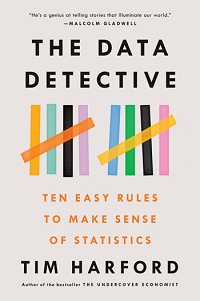
Building on well-researched examples across domains and time, Harford
reminds us of key steps to take when analyzing a series of statistics,
including maintaining some distance so as not to be influenced by our
biases and personal experiences, which may not be representative; pausing
and reflecting before coming to a conclusion; and, as a detective would,
asking simple questions (What are we trying to measure? What is the sample
or universe used?) to get a sense of context and perspective. His examples
of the different measures of income and wealth, poverty, health, and murder
rates—as well as prediction of election results—are telling, and we can be
seriously misled if we don’t scrutinize carefully the data we regularly
encounter.
The book also delves into new areas such as big data and computer
algorithms, presenting some of the benefits of these new sources of large
administrative data sets but reminding us also of their limitations and
potential biases. Harford’s book illustrates with convincing examples the
importance of data transparency, vigorous analysis, and the protection of
the independence of statistical agencies, which he rightly calls “nations’
statistical bedrock.”
The Data Detective
comes at the right time: we face an onslaught of statistics on critical
issues such as the consequences of climate change, the COVID-19 pandemic,
the economic downturn, and Brexit, just for starters. This well-documented
book is a must for anyone who is curious about how to make sense of all the
information about this complex world in which we live.