



We must view universal health coverage as a public policy goal and an investment
The COVID-19 pandemic is devastating evidence that when health is at risk, everything is at risk. That’s true for individuals and families confronting a life-threatening illness, and it’s true for countries—and the whole world—in the face of epidemics and pandemics.
Beyond the death and disease caused by the virus itself, COVID-19 has disrupted essential health services for millions of people, jeopardizing many of the gains made in recent years against maternal and child mortality, HIV, malaria, tuberculosis, and more. Millions have been forced into poverty, and global income has contracted.
Safeguarding people’s health relies on resilient health systems that ensure everyone has access to the good-quality services they need, without facing financial hardship. This is what we mean by universal health coverage (UHC).
UHC is much more than “health care” provided by health workers in health facilities; it includes a full range of services to promote health and prevent disease at the population level—outbreak surveillance, safe water and sanitation, and anti-smoking campaigns, just to give a few examples. Progress toward UHC therefore has many benefits beyond treating diseases, including improved health security and better protection against the ravages of future pandemics and epidemics.
At the United Nations General Assembly in September 2019, just a few months before the pandemic struck, all countries endorsed the Political Declaration on Universal Health Coverage, affirming that “health is a precondition for and an outcome and indicator of the social, economic and environmental dimensions of sustainable development and the implementation of the 2030 Agenda for Sustainable Development.”
That statement is even more relevant now than it was then. The pandemic has reminded us that health is not merely an outcome of sustainable development; it is the means.
How to sustain progress toward UHC
While the pandemic highlights the need for UHC, we must recognize the problems that predate it. Hundreds of millions of people continue to pay large portions of their household budgets out of pocket for health care. These costs can force households into poverty, wipe out their savings, and keep them from seeking care altogether.
Although COVID-19 demonstrates why UHC is so important, the pandemic may actually put it further out of reach for more people. The health crisis has triggered a global economic crisis that the world’s poorest people can least afford. As a result, the already heavy debt load in some countries will only get worse, and without targeted relief, higher debt servicing costs may reduce public spending on social sectors, including health, despite a growing need for essential health services.
Public financing is the core of UHC. No country has made significant progress toward UHC without relying on public monies as its main funding source. Sustained progress toward UHC is, however, about much more than how much money is spent; how well funds are spent is the key.
How well public funds protect households from impoverishment caused by out-of-pocket health spending depends on the design of coverage policies, backed by financing that reinforces these policies through supportive budgetary and service purchasing arrangements. This entails more than just revenue: both the “engineering” and “architecture” of the entire health financing system must change.
COVID-19 has been a stress test of public financial management systems, exposing their strengths and weaknesses in responding to a health emergency. The best-performing systems have been those with a flexible budget structure that dedicates and releases funds through broad programmatic envelopes linked to policy objectives, rather than narrowly, using multiple detailed line items. The pandemic has also shown the importance of being able to move money quickly to frontline service providers through robust transfer mechanisms and formula-based allocations.
Priorities for action
The pandemic has unmasked the importance of public health by demonstrating how essential it is to human lives and livelihoods. Health and finance authorities must now work together to bolster health systems and economies in a mutually reinforcing way, through several specific actions.
First, we urge countries to rethink deficit spending policies, embracing a multiyear fiscal vision that cushions human hardship and, where relevant, to consider actions such as debt relief and economic assistance. UHC will take more than just one year; it requires reforms sequenced over several years. It must be embedded in annual and medium-term government budgets. Health expenditure must be seen not simply as a cost, but as an investment in health security, productivity, and inclusive economic growth. We call on health and finance leaders to collaborate on budget priorities, supporting the COVID-19 response as well as non–COVID-19 health services. Macroeconomic and fiscal constraints will require reexamination of spending across sectors, including defunding ineffective programs.
Second, spending priorities must reinforce public health by increasing investment in common goods for health to control the pandemic, establishing strong health systems and bolstering societal foundations for mutual support of UHC and health security objectives. A large push is needed to establish effective public health capacities and interventions that serve all people while strengthening existing health system foundations to support preparedness for health security.
Third, we urge countries to adjust public financial management systems to align public spending on health with service delivery objectives and to ensure accountability for results. The COVID-19 crisis has magnified and exposed systemic bottlenecks in health spending. It has forced countries to adapt their public financial management systems to provide greater financial flexibility to the front lines and to tailor accountability systems to respond. Some mechanisms introduced during the COVID-19 response may be considered for future nonemergency health needs that will keep evolving and require flexibility of public finances.
Finally, and most important, equity must be at the center of UHC, by prioritizing protection against financial hardship for the poor and vulnerable. COVID-19 has exposed systemic inequities in access to health care, with the poor suffering disproportional losses. An equity-sensitive approach is critical, given that overall health coverage rates often mask growing inequalities.
Collaborating for success
The World Health Organization (WHO) has worked closely with international financial institutions in the past and will deepen this engagement in the future. Examples of this work include
- Joining forces with the World Bank on the sustainable financing accelerator of the Global Action Plan for Healthy Lives and Well-being for All, as well as the health financing workstream of the Access to COVID-19 Tools (ACT) Accelerator.
- Engaging with the IMF on sustainable financing issues under the framework of the WHO Montreux Collaborative. A joint review of extra-budgetary funds for COVID-19 by the WHO and the IMF was released in August 2020.
- Collaborating with both the IMF and World Bank this year to work on health budget execution issues, a new program to mobilize health and finance leaders to address bottlenecks in public expenditure management systems.
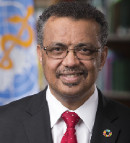
TEDROS ADHANOM GHEBREYESUS is director-general of the World Health Organization.
WHO staff members Helene Barroy, Joe Kutzin, and Susan Sparkes provided support for this article.
Opinions expressed in articles and other materials are those of the authors; they do not necessarily represent the views of the IMF and its Executive Board, or IMF policy.