A larger and more ambitious initiative compared to its predecessor TPA-TF, the RMTF is an important response by the IMF and its partners to the “Addis Challenge” in the area of domestic revenue mobilization (DRM). This challenge reflects the recognition—embodied within the 2030 Agenda for Sustainable Development—that many low- and lower middle-income countries have a critical need for assistance in improving their tax capacities. The RMTF is a unique opportunity for a broad range of development partners to take a collective approach in supporting a holistic, medium-term capacity development (CD) initiative to strengthen tax policies and administrations in a select group of countries.
The RMTF’s core focus for assisting low- and lower middle-income countries has two main delivery approaches:
- Intensive engagement in support of transformational reform. This involves supporting the comprehensive reforms beneficiary countries make to their tax systems, including redesigning tax policy frameworks and strengthening revenue administrations. This engagement requires country authorities’ sustained commitment, along with well-sequenced support from the RMTF and other technical assistance (TA) providers.
- Targeted support for reforms. This work focuses on specific areas of the tax system where improvements are most needed. This more targeted support is also framed in the context of a multiyear engagement, and provides scope for assisting in cases where more comprehensive reform programs are not needed, or where a country has lower absorption capacity.
Other important components of the RMTF work in support of sustainable DRM:
- Diagnostic tools play a key role in defining reform priorities and subsequent capacity building activities. In particular, the Tax Administration Diagnostic Assessment Tool (TADAT), the International Survey on Revenue Administration (ISORA), and the Revenue Administration Gap Analysis Program (RA-GAP) will be used to assess where the impact of TA is likely to be highest, as well as to monitor the progress of reforms.
- Synergies between IMF TA and training are to be achieved for maximizing the beneficiaries’ capacity for tax reform. A specific training module focuses on face-to-face and online courses to support and complement TA delivery on selected tax policy and administration topics, particularly for low-capacity countries.
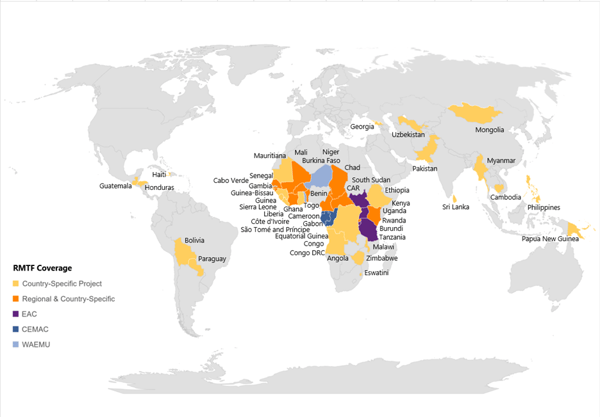
The RMTF is envisaged as a US$77 million program and has received funding from Australia, Belgium, Denmark, European Union, Germany, Japan, Korea, Luxembourg, Netherlands, Norway, Sweden, Switzerland (as of April 2019). Its project portfolio has a broad geographical coverage with over 30 country-specific and regional CD projects activated worldwide.