Pocholo Espina, 22, always thought he would grow up to be a doctor or lawyer. Instead, the young Manila resident is the founder and CEO of Sip PH, a company that makes and distributes stainless steel straws.
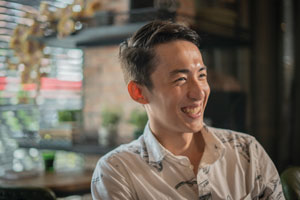
It all started when Espina was a student at Ateneo de Manila University. He got interested in the zero-waste movement, which promotes a lifestyle that minimizes the amount of waste sent to landfills by encouraging the reuse of products. Espina had difficulty finding a metal straw for his own use. So he purchased some in bulk and sold the rest, discovering that there was strong demand for the product. Investing 40,000 pesos of his savings, he started a company to produce reusable metal straws for environmentally conscious consumers.
Sip is still a small-scale business, but Espina has gone from a tiny customer base built by word of mouth to thousands of orders through social media and via a few shops in Manila. Earlier this year, he was interviewed on CNN Philippines.
Espina practices skin diving and sees it as a personal mission to keep his country’s oceans and waterways clean. “The Philippines is at the very center of marine biodiversity in the world,” he says. Composed of 7,641 islands, the country is located in the “Coral Triangle,” an area recognized as the global center of marine biodiversity. It includes portions of the waters of the Philippines, Malaysia, Indonesia, Timor-Leste, Papua New Guinea, and the Solomon Islands.
The area’s marine life comprises not just coral reefs but also seagrass beds, mangrove and beach forests, fisheries, other invertebrates, seaweed, and marine mammals. “Once you see its beauty firsthand, you’d understand why you have a pretty good reason for protecting it,” Espina says.
The Philippines bans incineration of trash, and the disposal of solid waste poses a major challenge. (Sip PH’s website says that the Philippines is the third largest disposer of ocean plastic in the world.) Increasingly, the plastic waste problem is attracting the world’s attention—global coffeehouse chain Starbucks just announced its plan to phase out plastic straws, which are difficult to recycle, and others are following suit.
Espina's concern for the environment is typical of his generation. According to the World Economic Forum’s 2017 Global Shapers survey, nearly half of all young people rank climate change and the destruction of nature as the most serious issues affecting the world today. And the IMF finds that, in addition to its harmful effects on health, climate change has potentially sizable economic costs.
Rather than trying to tackle the broader problem of plastic waste, Espina decided to focus on a smaller, more manageable issue. Giving up plastic straws, he reckons, is a small sacrifice ordinary people can make every day.
Over the long term, Espina would like to get more involved in advocacy for the environment. For now, he’s had to focus on the bottom line. “People often ask, in a social enterprise, which is more important—the social aspect or the enterprise aspect? Well, it has to be the enterprise, because without that there wouldn’t be a social impact.”
Reported by VINA SALAZAR in Manila, Philippines