One of the silver linings of the pandemic is the renewed momentum to build a stronger, greener economy.
Yet making real progress on the climate crisis requires multilateral organizations, governments, and the private sector to work together. In this vein, the Development Data Partnership is a new model for sharing information across the private and public sectors that can inspire data insights capable of shaping climate-responsible economic development decisions. This initiative currently consists of 25 data partners, including LinkedIn, and 6 development partners, including the IMF and the World Bank.
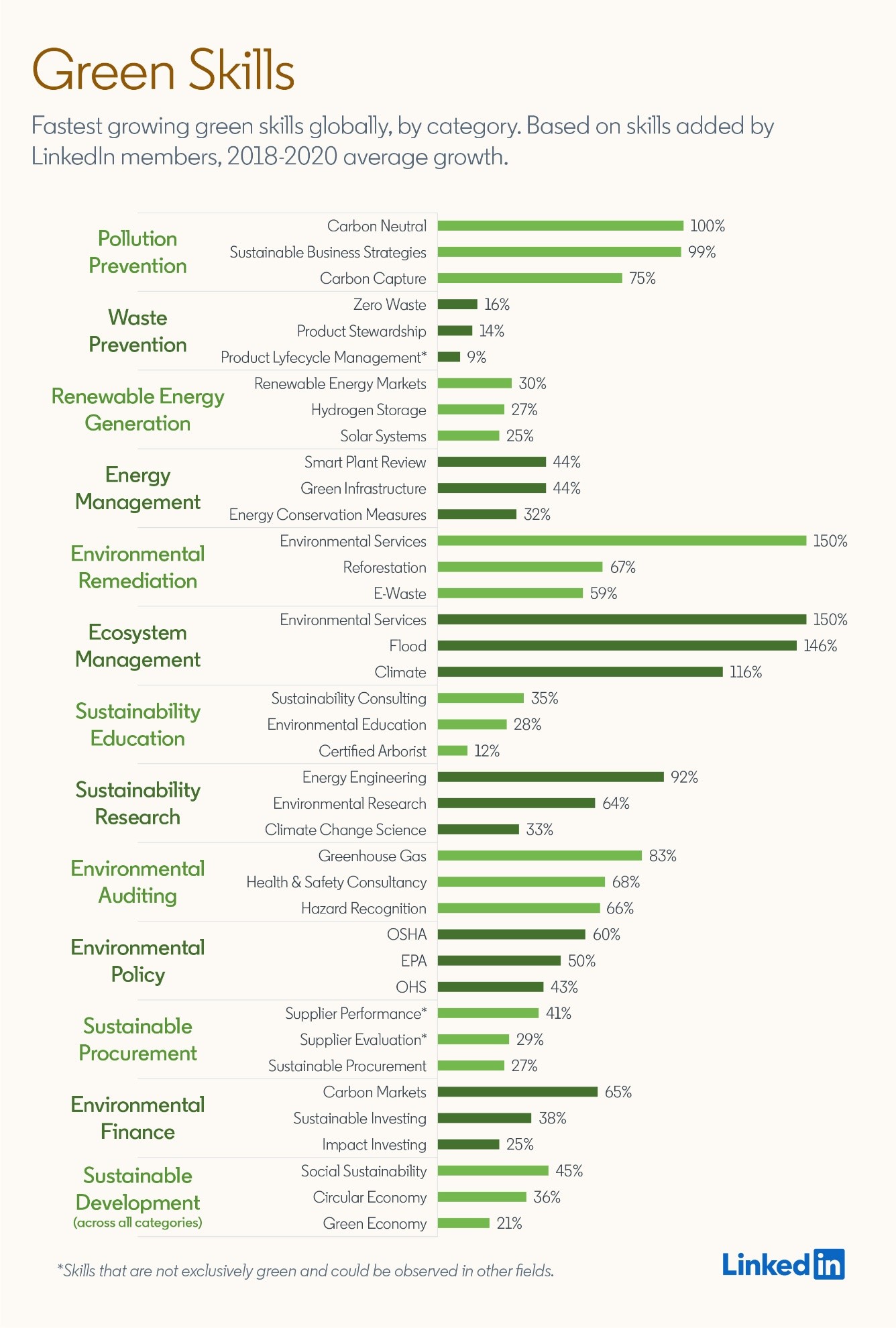
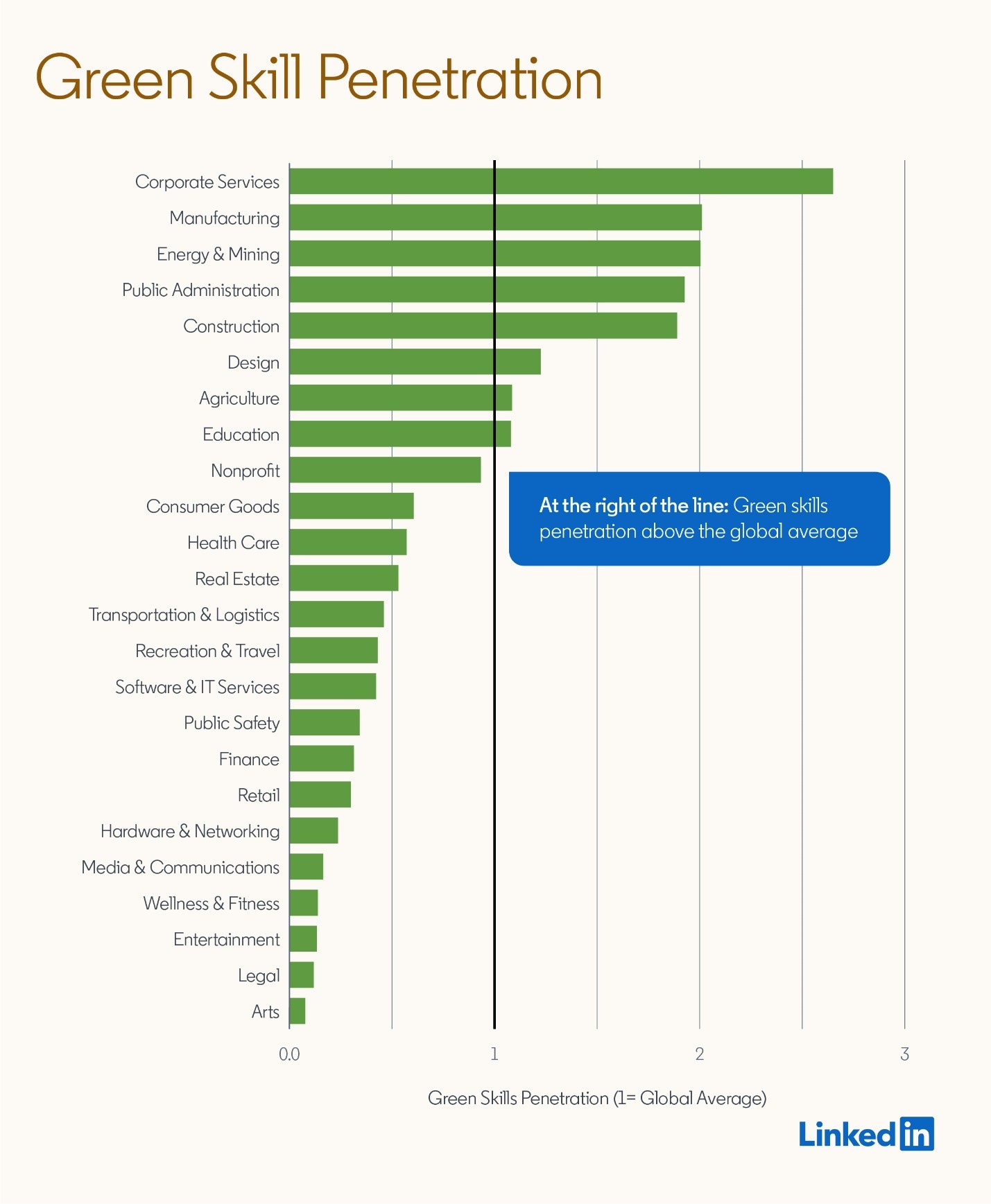
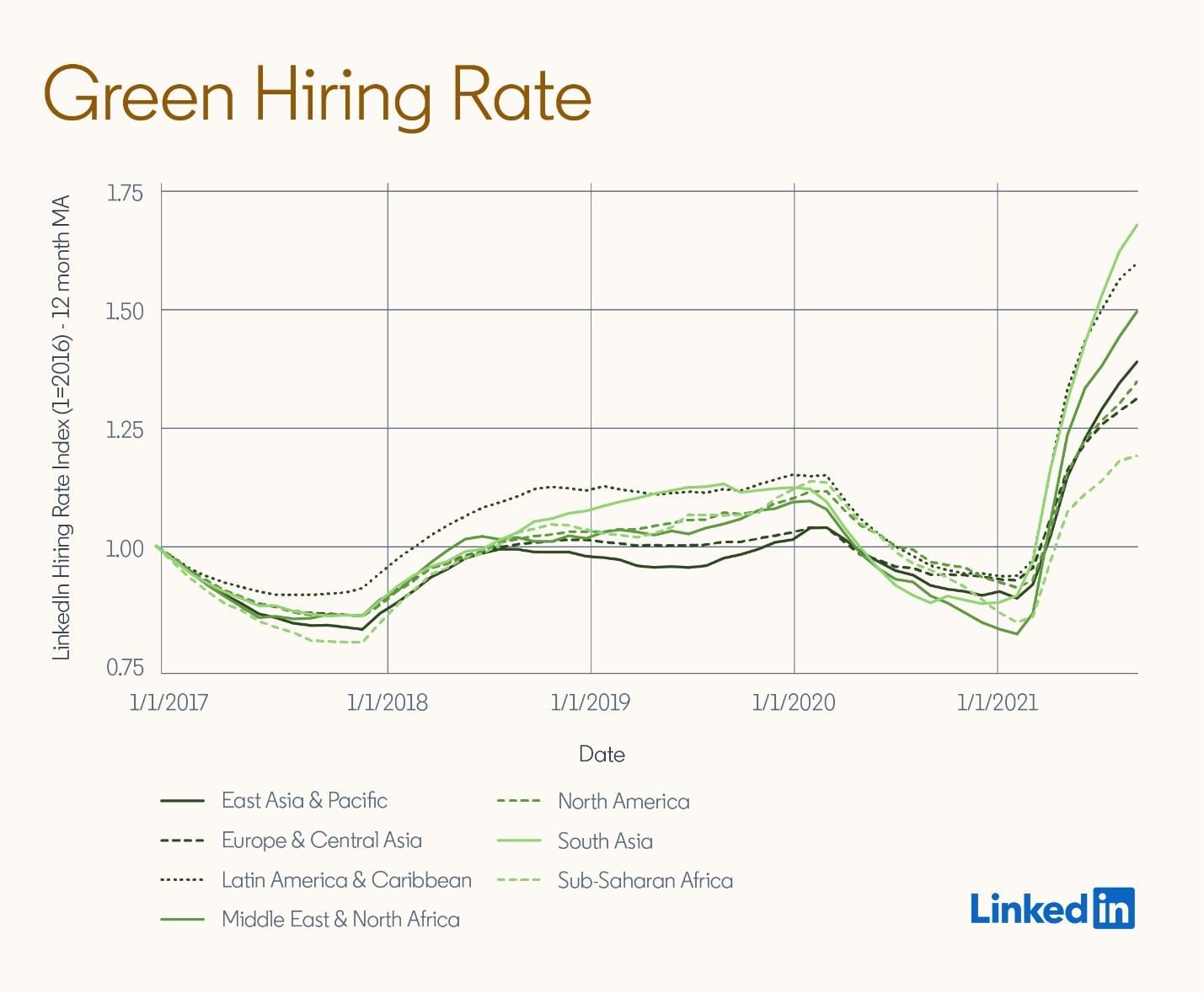
As the world’s largest professional network, LinkedIn can help shed light on emerging trends and opportunities in the talent market. To help our 774 million-plus members identify and capture economic opportunities, we generate the “Economic Graph”—a real-time data set updated nearly 5 million times a minute—that allows people to connect with one another, find companies, apply for jobs, and develop new skills. Aggregate data and insights from LinkedIn’s Economic Graph can complement traditional labor market data available to policymakers. LinkedIn data reveal that one of the fastest-growing trends is the growth of the green economy and demand for talent with green skills.
Loading component...
Loading component...
Loading component...
Business’s responsibility
Like other organizations, those in the private sector should take stock of how and where they can deploy their resources and knowledge to help combat the climate crisis. Real-time data collaboration—such as through the Development Data Partnership—can provide important insights to help create a greener economy.

Karin Kimbrough is the chief economist at LinkedIn.
Opinions expressed in articles and other materials are those of the authors; they do not necessarily reflect IMF policy.